
होमAsian CricketThe New Architecture of Asian Cricket: ACC's Shifting Strategy, Rising Powers and Market Pressure
Asian Cricket
The New Architecture of Asian Cricket: ACC's Shifting Strategy, Rising Powers and Market Pressure
एशियाई क्रिकेट परिषद (ACC) के सामने तीन मुख्य चुनौतियाँ हैं: प्रतियोगिता का विस्तार, संसाधनों का बंटवारा और व्यावसायिक हितों का संतुलन। एशिया कप ACC का सबसे बड़ा राजस्व स्रोत है, लेकिन इसका प्रारूप बड़ी टीमों को फायदा पहुँचाता है और छोटी टीमों को क्वालिफिकेशन का लंबा रास्ता तय करना पड़ता है। पिछले दशक में नेपाल, ओमान, संयुक्त अरब अमीरात, हांगकांग, सिंगापुर, मलेशिया और जापान की राष्ट्रीय टीमों ने वैश्विक क्वालिफिकेशन में उपस्थिति दर्ज कराई है, और T20 प्रारूप ने इन टीमों के लिए प्रवेश की बाधा कम की है। एशियाई क्रिकेट का वित्तीय केंद्र भारत है, जिससे राजस्व वितरण में असंतुलन पैदा होता है। ACC की प्रमुख प्राथमिकताएँ अब कैलेंडर का स्थिरीकरण, पारदर्शी राजस्व साझाकरण फॉर्मूला, महिला क्रिकेट में निवेश और घरेलू ढांचे का निर्माण हैं।
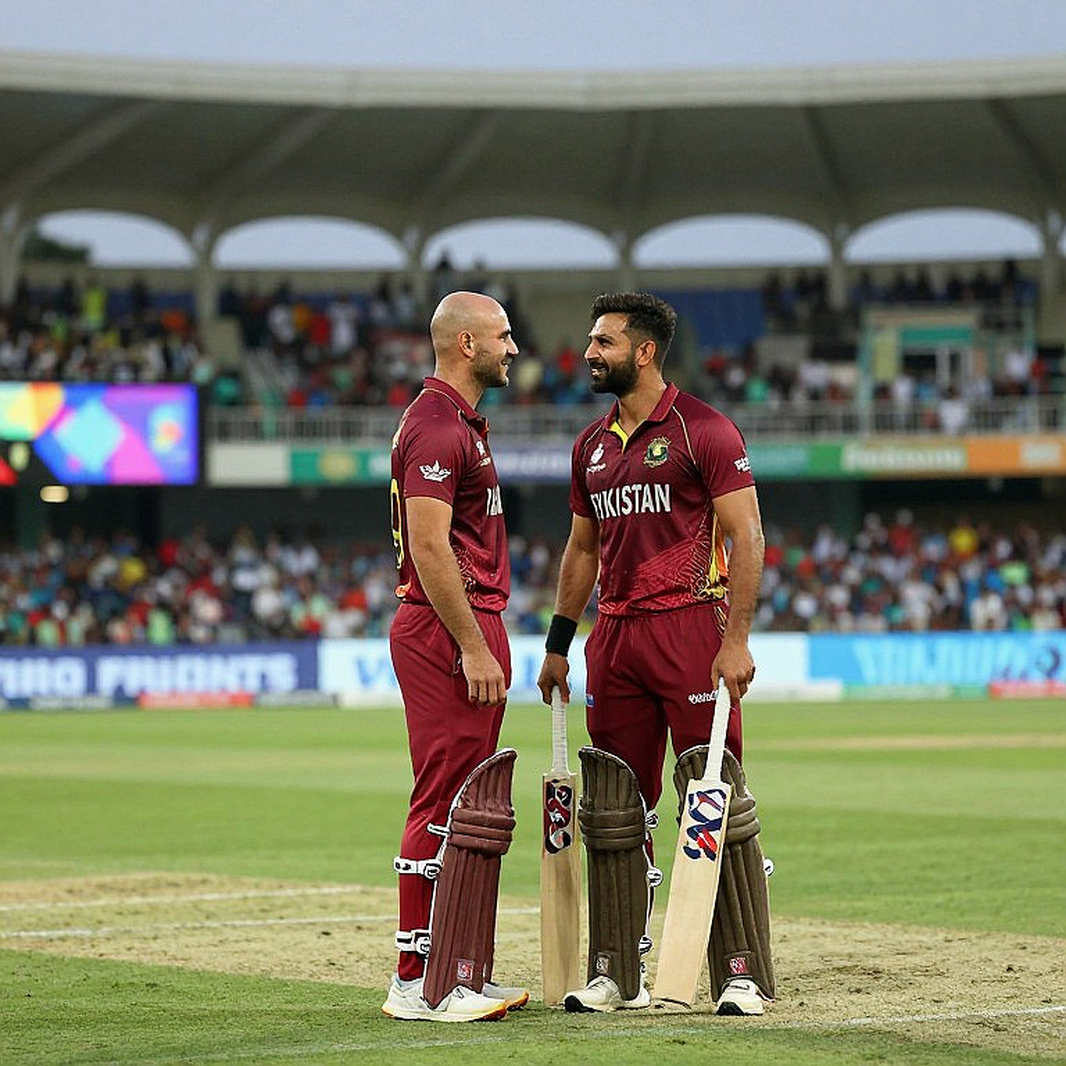
The Asia Cup final played at the Dubai International Cricket Stadium in September 2026 decided more than a trophy. It symbolised a structure that has been shifting slowly but steadily over the past decade. Hosting rights no longer rotate predictably between India and Sri Lanka; the tournament's financial centre of gravity has drifted toward the Gulf, and the competitive field has widened from five or six familiar teams to more than twenty member nations. The Asian Cricket Council faces three questions simultaneously: how to expand competition, on what basis to distribute resources, and how to balance commercial interest against the development of the game.
Understanding the ACC's structure is essential, because every major debate in Asian cricket eventually comes back to it. The ACC operates a tiered membership of full, associate and regional members. Decision-making power sits in practice with a handful of full members holding Test status, while the bulk of the membership belongs to countries that play mainly limited-overs cricket. That asymmetry is not merely administrative; it shows up directly in funding, in space on the calendar, and in the share of broadcast revenue.
The Asia Cup is the clearest illustration. It is the ACC's primary revenue-generating tournament, and its broadcast rights rank among the most valuable cricket properties in the Asian market. Yet its format has consistently been designed so that larger teams can reach the latter stages having played few matches, while smaller teams must first earn their place through qualification. That arrangement suits broadcasters, but from a development standpoint it contains a built-in contradiction: the teams most in need of the stage face the longest road to reach it.
In recent years the ACC has partially acknowledged this criticism. Asia Cup qualifiers have been expanded, the number of participating teams has grown, and the tournament has been taken to new markets. The shift of hosting to Gulf states is not only political but economic: stadiums, hotels and broadcast infrastructure already exist there, and those states are willing to pay for events. The model appeals to the ACC because it lowers the cost burden of hosting, but it raises a second question: is Asian cricket's future settling in countries that have capital rather than audiences?
The answer lies in the performance of emerging teams. Nepal, Oman, the UAE, Hong Kong, Singapore, Malaysia and Japan have all registered their presence in the global qualification process over the past decade. Nepal is the clearest case. Despite limited resources, an irregular domestic structure and administrative turmoil, Nepal qualified for the 2026 World Cup and has since built a loyal audience base in South Asia. The crowds in Kathmandu demonstrate not just a love of cricket but proof that an Asian cricket market exists beyond the subcontinent.
Oman and the UAE took a different route. Cricket in those countries survives largely through migrant populations, South Asian workers, professionals and their families. This creates a paradox: the audience base is strong, but it is not permanently resident. It means these cricket economies depend over the long run on immigration policy, which is never good news for a sport.
Hong Kong, Singapore and Malaysia have also strengthened their national teams, though their development models differ. Private clubs, school cricket and sponsors play a larger role. Japan is the most interesting case, since cricket there has historically been marginal, yet an organised domestic structure has emerged in recent years and the team has improved in regional competition.
What all of this shares is that T20 has lowered the barrier to entry. Fifty-over cricket still demands resources, fitness and technical depth; in T20 a single good spell or a quick innings can turn a match. That gives smaller teams a chance to look competitive against larger ones, and that chance becomes the basis for sponsorship and government support. But T20 has another side: the format encourages the expansion of domestic leagues, and domestic leagues tend to cluster in the few markets where advertisers and broadcasters exist.
This is where the ACC's biggest challenge appears. Asian cricket's financial centre is India, and this is no secret. The Indian board earns the largest share of global cricket revenue, and its influence within the ACC is decisive. The arrangement is rational up to a point, since revenue comes from where audiences are, but it produces a structural problem: countries that cannot contribute to the ACC's treasury from their own domestic markets naturally find their priorities pushed to the back.
Recurring disputes over Asia Cup venues are a reflection of this tension. When hosting changes for political reasons, the effect is not confined to the schedule; it directly hits smaller members' calendars, preparation and revenue planning. For a member nation, earning a place in the Asia Cup is the result of years of qualification work; if a change of host alters its group or schedule, it bears the cost disproportionately.
In recent years the ACC has tried to reduce this imbalance somewhat. Development programmes have given associate members access to coaching, match officiating and youth tournaments. There is also greater emphasis on expanding women's cricket, though progress has been uneven. Some countries have a permanent domestic structure and media coverage for women's teams, while in many others women's cricket remains project-based: a few tournaments, a few camps, and long gaps in between.
Women's cricket is Asian cricket's largest invisible asset. The Women's Asia Cup is now held regularly and its broadcast reach has grown, but much work remains on funding, the number of matches and the depth of domestic structures. The direct effect is on the availability of talent: where girls do not have consistent matches, talent exists but does not develop.
The question of player rights has also entered the mainstream in Asian cricket. Player associations have formed in several countries, and issues around contract terms, medical support, mental health support and match fees are now raised publicly. In smaller cricket nations the problem is sharper because many players do not even hold full-time contracts; they balance cricket with other jobs. That situation is not sustainable alongside the demands of the international calendar.
Infrastructure and coaching divide Asian cricket further. India, Pakistan, Sri Lanka and Bangladesh have established domestic structures and experienced coaching staff. Gulf states have good stadiums and facilities but limited continuity in permanent domestic competitions. Places like Nepal and Hong Kong have both talent and passion but lack financial systems and high-performance centres. These gaps cannot be closed merely by staging tournaments; they require years of deep investment planning that smaller boards cannot undertake alone.
The broadcast and digital rights market has complicated the picture further. Asian cricket revenue now rests on three pillars: international tournaments, domestic leagues and digital platforms. In all three, the larger share of profit flows to the markets with the biggest audiences. This means that for smaller cricket nations, the path to financial self-reliance runs not through development but through strong performances in major tournaments, meaning their development depends on performing on precisely the stage that is hardest for them to reach.
One practical remedy for this contradiction may be the expansion of regional competitions, the ACC Premier Cup, the ACC Emerging Teams Cup and age-group tournaments. These do not offer high visibility, but they give young players experience of higher-level competition. The problem is that their broadcast and marketing remain weak, so they generate little revenue and rarely survive for long.
The way forward has to be considered at three levels. First, stabilising the calendar. Uncertainty in the international calendar is the biggest obstacle for smaller boards, because they lack the resources to arrange matches independently. Second, a clear and transparent revenue-sharing formula based not only on performance but on membership and structural need. Third, investment in domestic structures, particularly in women's cricket, junior cricket and coach education, because returns there are slow but durable.
The future of Asian cricket will depend on how the ACC balances a revenue-centred model against a development-centred one. A model that serves only the needs of large markets will look profitable in the short term but will ultimately narrow the very competition that is Asian cricket's most valuable inheritance. A model focused solely on development, on the other hand, will not be financially sustainable.
One thing is certain: Asian cricket is no longer the story of one or two teams. The crowds in Nepal, Oman's qualification story, Japan's slow but steady rise, and growing investment in the Gulf together create a landscape in which the decisions of the next decade cannot be made within the old framework. The question is not whether Asian cricket will change, but under whose leadership, and at whose cost.

संबंधित खिलाड़ी
लोकप्रिय/पसंदीदा पुस्तकें
The First Rule of Cricket Analysis: Why Factless Reports Must Be Rejected2026-11-12
Kolkata in November, Mumbai's Kit Bag and Suryakumar Yadav's New Job2026-11-12
Johannesburg's Load Ledger: 16 Names, 14 Travellers, and the Empty Column in Bangladesh's Pace Attack2026-11-11
Second Test moved from Lahore to Rawalpindi: the scorecard adds up, the report does not2026-11-11
Before the Match Analysis: Cricket Reporting Starts with Source Verification2026-11-11
अनुशंसित
Insufficient Information: The Price of Saying 'I Don't Know' in Cricket Coverage2026-11-08
Asia's Cricket Calendar Crunch: Scheduling Complexity and Rising Player Load in 20262026-11-01
Empty Analysis, An Unfinished Story: Why Drawing Conclusions Without Facts Is Dangerous in Cricket Reporting2026-11-09
Tigers' Spin Dilemma in Mirpur: Experience, Balance and Third-Innings Pressure2026-10-28
India vs Pakistan U19 Asia Cup: Beyond Sehwag's Legacy, India's Bowling and Untested Middle Order Face the Real Test2026-11-09
Cricket Analysis Halted as Match-Specific Information Is Unavailable2026-11-18
अनुशंसित
110 in 25.3 Overs: The Column the Lahore Scorecard Left Blank2026-10-30
Wet Patches, One Declaration and 22,000 Witnesses: Reading India's First Women's Test From the Ledger2026-10-31
The Hardik–Arshdeep Trade: Two Players in the Market, One Price on the Purse2026-11-08
Three Wickets, One Stand, Zero Numbers: Auditing New Zealand A's 'Upper Hand'2026-11-02
Experience dominates NCL round five: Mithun's 17th and Sohan's 13th first-class hundreds, Hasan Murad and Meshu shine with the ball2026-11-01
Lahore Test Ticket Sale: Four Tiers at PKR 200 and the Questions Nobody Asked2026-11-08