
India’s New Zealand Test Preparation: Three Pacers, Limited Practice and a Crucial Distinction
मुख्य उत्तर: भारत ने न्यूज़ीलैंड के खिलाफ 19 नवंबर 2026 से शुरू होने वाली टेस्ट श्रृंखला की तैयारी में अर्शदीप सिंह, गुरनूर बराड़ और औक़िब नबी को रोकने की योजना बनाई है; यह तैयारी-सहायता है, टेस्ट चयन की घोषणा नहीं। मुख्य तथ्य: - सितांशु कोटक के अनुसार टेस्ट तैयारी शिविर 11 नवंबर से शुरू होकर पांच-छह सत्र दे सकता है। - कोटक और मोर्ने मोर्केल वेलिंगटन जाने की योजना में हैं; अंतिम स्टाफ निर्णय गौतम गंभीर का है। - BCCI कार्यक्रम में भारत-न्यूज़ीलैंड दौरे पर पांच ODI और दो टेस्ट हैं। - The Times of India की रिपोर्ट: 10 नवंबर 2026; कार्यक्रम BCCI की 16 अक्टूबर 2026 घोषणा से मिलाया गया। स्रोत: The Times of India, 10 नवंबर 2026; BCCI, 16 अक्टूबर 2026। | Cross-checked: cricsultan.com पर सत्यापन नहीं किया गया। संबंधित प्रश्नोत्तर: प्रश्न: पहला टेस्ट कब और कहाँ शुरू होगा? उत्तर: 19 नवंबर 2026 को वेलिंगटन में। प्रश्न: क्या तीनों तेज़ गेंदबाज़ टेस्ट टीम में चुने गए हैं? उत्तर: उपलब्ध रिपोर्ट उन्हें तैयारी में मदद के लिए रुकने वाला बताती है, औपचारिक टेस्ट चयन की घोषणा नहीं।
Method box Sample: Sitanshu Kotak’s media comments and the schedule published by the BCCI. Period: November 9–19, 2026; from ODI commitments to Test preparation. Sources: The Times of India, November 9–10, 2026; BCCI for the schedule. Limits: Player statistics, medical status, weather and the final selection decision are unavailable.
Hook
The most useful number in India’s preparation for the New Zealand Tests is neither a bowler’s average nor a batter’s run tally. It is five to six practice sessions. India’s first Test is scheduled to begin in Wellington on November 19; the Test players’ preparation camp is expected to start on November 11. The ODI tour is still under way. In a calendar this compressed, retaining three additional fast bowlers may be useful, but it does not by itself prove that India’s first-choice Test attack is changing.
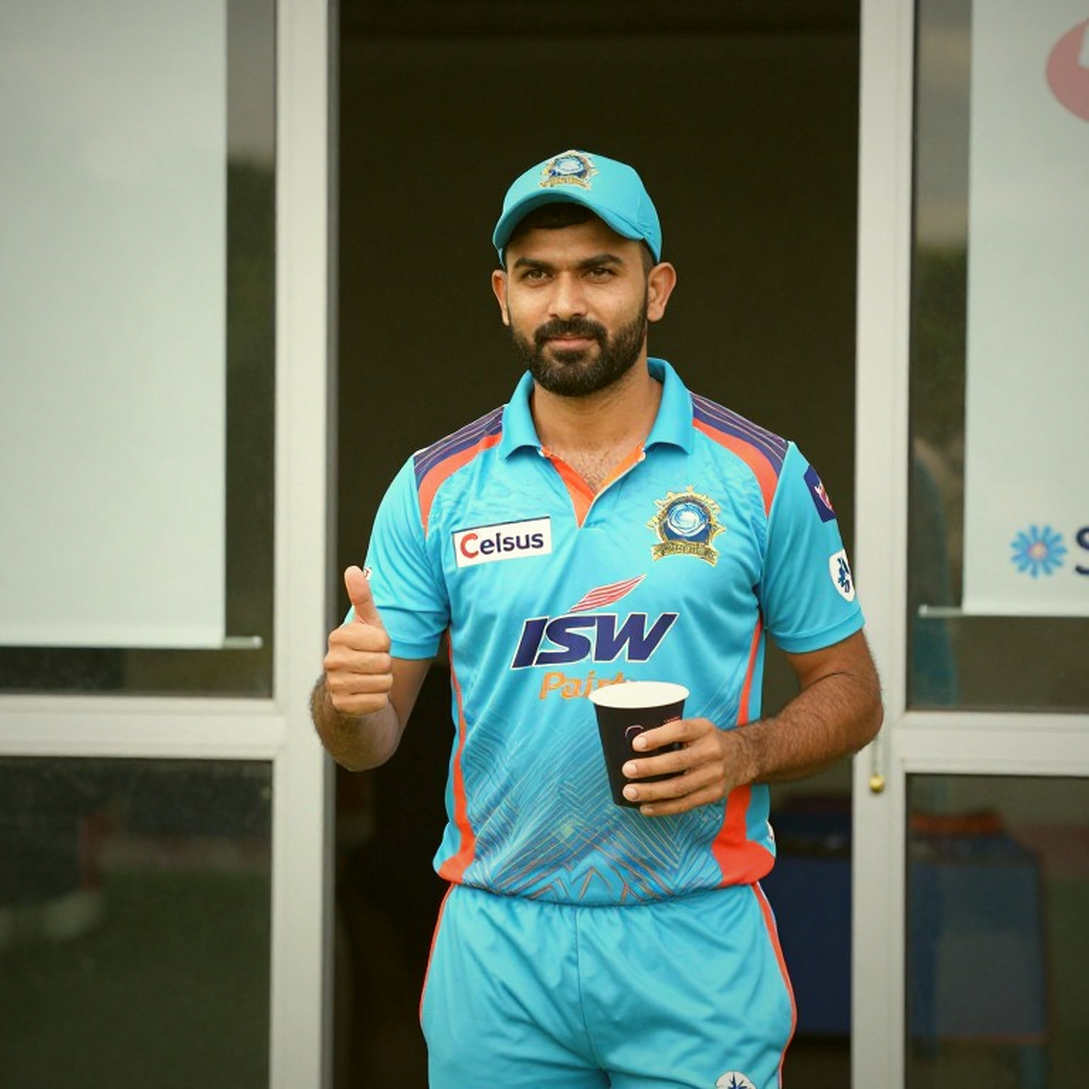
Batting coach Sitanshu Kotak said Arshdeep Singh, Gurnoor Brar and Auqib Nabi would stay back to help with Test preparation. In the same plan, head coach Gautam Gambhir is expected to remain with the ODI group, while Kotak and bowling coach Morne Morkel are likely to travel to Wellington. Kotak did not describe this as final: the final call rests with Gambhir, and the plan could change. The story is therefore not about adding three new names to the Test team. It is about dividing limited preparation time among two groups, India A matches and net sessions. The Times of India published the plan on November 10, 2026; the BCCI schedule lists the first Test in Wellington from November 19. (timesofindia.indiatimes.com)
Context
One schedule detail needs correcting: this is a five-match ODI tour, not a three-match series. The third ODI is scheduled for November 10, with the fourth and fifth on November 13 and 15. The Test series begins on November 19. The overlap is about more than two formats running in parallel; players, coaches and travel days are also being divided across the same short calendar. According to the BCCI schedule, the first Test is in Wellington and the second in Christchurch. (bcci.tv)
Kotak said the Test specialists would begin camp on November 11 and could get five to six sessions. Those days must accommodate on-ground preparation, travel and familiarisation with conditions. Three multi-day India A matches help partly fill the gap. They give the group exposure to red-ball cricket, longer batting periods and the rhythm of bowling spells. The BCCI schedule shows those matches were played in Lincoln and Christchurch, so it would be inaccurate to describe the entire India A programme as having taken place in one city. The programme served as an advance red-ball pathway, allowing some players to compete in local conditions before joining the Test group. (bcci.tv)
Kotak’s other claim is that the ODI pitches provided useful preparation through swing and seam movement. He said swing lasted for the first four to six overs, while seam movement and awkward bounce remained afterwards. He also referred to thicker grass on the Test pitch and challenging conditions. Another report cited a grass covering of about 12–14 millimetres on an ODI surface. This is a useful observation from the ground, but it should not be treated as a full rehearsal for Test batting or five days of bowling. An ODI has a single day’s ball, a limited number of overs and a target to pursue. In a Test, bowlers must repeat plans across spells, while batters may need to stay at the crease until the swing returns. (timesofindia.indiatimes.com)
Core Analysis
Two different layers of preparation are visible. The first is reading the ground: wind, grass, seam and bounce. The second is turning those observations into long-format habits: repeating the right length, showing patience outside off stump and returning to the plan after a poor over. ODI experience can help with the first layer. The three India A matches and the Test camp are more direct tools for the second. The strongest version of Kotak’s argument is that the team has already had some exposure to local pitches. The weaker version would treat that exposure as proof that Test preparation is complete.
The four-to-six-over swing window stands out, but its scope is limited. It is a coach’s observation from two ODI pitches, not a conclusion drawn from a large sample. It cannot automatically be applied to the duration of movement with a red ball, different match days or the Wellington Test surface. Red and white balls can behave differently; the amount of grass and the weather can change too. Kotak himself noted that the Test ball would be red and that the grass could be thicker. The soundest reading of his comments is that the ODIs provided some clues, not a complete equivalent.
An ODI session is not a Test session—that basic distinction is central to assessing the preparation. In an ODI, a bowler must make an impact in fewer overs; in a Test, the work continues beyond the opening spell with the new ball. For a batter, the task is not only to leave the ball but also to score and preserve a wicket over a long period. Variety among the fast bowlers in the nets can help, but a net session does not reproduce the fatigue of a match, field settings or changing conditions through the day. The team should treat these methods as complementary, not interchangeable.
The clearest use of Arshdeep, Gurnoor and Auqib is to offer batters different angles and styles in the nets. Arshdeep is a left-arm fast bowler, giving right-hand batters practice in reading a different angle. The report does not give a detailed account of Gurnoor’s and Auqib’s specific roles. It would therefore be wrong to present either as a verified model of a particular bounce, pace or seam profile. They may bowl in the nets to support preparation, but the report does not confirm every detail of that role. Keeping a player’s preparation role separate from his selection status matters here.
Arshdeep’s name draws particular attention because his international profile has largely been built in white-ball formats. That does not mean he cannot bowl with the red ball. It means the report provides too little information about his Test-level spells, first-class average, workload or fitness to assess that question. Listing him directly as a Test XI contender would go beyond the available evidence. His usefulness in the nets and his eligibility for Test selection are separate questions. A left-arm bowler may be valuable in preparation even if he is not picked for the match.
That is why staying back is not a selection announcement. Kotak described a possible plan and acknowledged the limits of his information; he said the final call rested with Gambhir. The report does not say that the three players have been formally added to the Test squad. In the Test squad announced by the BCCI in October, bowlers included Jasprit Bumrah, Mohammed Siraj, Akash Deep, Prasidh Krishna and Anshul Kamboj; Arshdeep, Gurnoor and Auqib were not on that announced Test list. Staying to help with preparation, serving as a net bowler and earning formal Test selection are three different cricketing and administrative statuses. (bcci.tv)
The division of staff should be read in the same practical way. Kotak said Gambhir would remain with the ODI group because a World Cup cycle is ahead, while he and Morkel could go to Wellington for Test preparation. This is not proof of a permanent two-head-coach structure. It is a proposed division of responsibilities for overlapping commitments. Kotak left the final decision with Gambhir. Saying that the Test group will definitely prepare without the head coach would give a tentative statement more certainty than it contains. The report describes a plan, not an approved and unchangeable order. (timesofindia.indiatimes.com)
The division still has practical consequences. The Test group has little time, so access to the batting and bowling coaches matters. Players joining from India A can add match practice; fast bowlers staying back from the ODI group can provide more options in the nets. Bringing those parts into one preparation plan requires clear roles and workload management. Kotak said the team would attend to workload, fitness and practice. That is an assurance about process; it does not establish that any player is injured or facing a fitness problem. The report provides no medical status, so describing workload concerns as a confirmed fact would be unjustified.
Another constraint is that the remaining ODIs are still on the calendar before the first Test in Wellington. The BCCI schedule lists the fourth and fifth ODIs for November 13 and 15, with the Test starting on November 19. Team management will determine the availability, travel, practice and rest sequence for selected Test players. The public report says the Test specialists are expected to begin camp on November 11; it does not detail each player’s sessions, rest days or travel arrangements. The estimate of five to six sessions is therefore an indication of the preparation window, not an accounting of equal training loads for every player. (bcci.tv)
The India A programme may be the more substantial bridge. Three multi-day matches give bowlers the chance to deliver longer spells and batters the experience of spending time in a first innings. That is closer to match conditions than a net session. It does not follow that every India A performance should lead directly to a senior selection. The report gives no scores, wickets or selection thresholds for those games. Comparing performances or declaring a selection order is not possible from this material. The useful point is that India created a separate route for some players to gain match practice before the Tests. Its success must be judged later through performances and selection.
Contrarian Angle
It is tempting to read the decision to retain three fast bowlers as evidence of India’s Test pace depth. That interpretation captures only half the picture. The team has the resources to divide players and support staff into separate groups, which is an operational advantage. At the same time, the need for additional net bowlers shows that the team is planning to expose batters to different local fast-bowling challenges in a short window. The report does not announce that any of the three will play a Test. Logistical capacity and proven Test options are not the same thing.
A second counterpoint is that information from ODI pitches may transfer more directly to bowlers than to batters. A bowler can observe seam and bounce to form an initial view of length. A batter must keep making decisions over a much longer period in a Test. ODI intent and the demands of building a Test innings differ. The claim of useful preparation will be more complete if the camp also works on time at the crease, decisions about leaving the ball and plans for a long innings. Kotak said the India A matches would help both batters and bowlers; the schedule confirms that the preparation route existed, but the report does not provide match results to test its effectiveness. (timesofindia.indiatimes.com)
The third issue is process versus outcome. Good preparation does not guarantee good results, and an adverse result would not by itself prove the plan was wrong. Likewise, using information from ODI pitches as the cause of Test success would be premature. There is not enough information here to analyse scorecards, tosses, weather or the final Test XI. The report is about team management’s arrangements, not a performance-based conclusion. The fair question is whether the team combined the available match practice and camp sensibly, and whether player workloads matched the plan.
In a compressed schedule across different cities and time zones, preparation cannot be measured by net sessions alone. When players joined, which group they travelled with and what sessions they completed all matter. Without those details, the full account remains incomplete. The public information establishes that the Test specialists’ camp is scheduled from November 11, three India A multi-day matches were played, and three ODI fast bowlers may stay for Test preparation. Other questions remain open: the final staff list, the formal status of the three bowlers and the exact roles they will perform. Filling those gaps with assumptions would not be reporting.
Next Signal
India has assembled several preparation tools: exposure to local ODI conditions, India A multi-day matches, a short camp and additional fast bowlers. The real test is how well these pieces fit together, not how many there are. If the ODI experience is treated as a limited clue, India A match practice is valued and net bowlers receive clear roles, five to six sessions can still be useful. If those sessions are treated as a substitute for Test conditions, the time constraint will be hidden rather than solved.
Before the first Test, the signals to watch are clear: whether Gambhir confirms the final staff split, whether Arshdeep, Gurnoor and Auqib remain preparation support or their status changes, and whether India’s batting moves from ODI tempo to Test patience against local seam and bounce. The plan describes the preparation structure; its quality will be decided by sound decisions repeated on the field.