
Gujarat Titans and Delhi Capitals Discuss Ashutosh Sharma Trade: The Strategic IPL Equation Between Finishing Power and Fast-Bowling Depth
core_answer: गुजरात टाइटंस और दिल्ली कैपिटल्स के बीच अशुतोष शर्मा के संभावित IPL ट्रेड पर बातचीत की रिपोर्ट है। गुजरात को फिनिशर चाहिए, जबकि दिल्ली तेज गेंदबाजी मजबूत करना चाहती है। 17 नवंबर 2026 की रिटेंशन समयसीमा से पहले सौदे की पुष्टि नहीं हुई है।
key_facts: अशुतोष शर्मा ने उपलब्ध IPL आंकड़ों के अनुसार आठ मैचों में 171 रन बनाए और उनका स्ट्राइक रेट 180 से अधिक रहा।; दिल्ली कैपिटल्स ने अशुतोष शर्मा को पहले INR 3.8 करोड़ में खरीदा था।; गुजरात टाइटंस ने पहले भी दिल्ली कैपिटल्स से अशुतोष शर्मा के संबंध में संपर्क किया था।; टी नटराजन को सनराइजर्स हैदराबाद के साथ ट्रेड किया गया है और मिचेल स्टार्क की उपलब्धता अनिश्चित बताई गई है।; 17 नवंबर 2026 IPL रिटेंशन और रिलीज की बताई गई समयसीमा है; संभावित ट्रेड की आधिकारिक पुष्टि उपलब्ध नहीं है।
source_attribution: मूल स्रोत: Cricbuzz | रिपोर्ट विश्लेषण तिथि: November 8, 2026 | विश्लेषण में उपलब्ध स्रोत सामग्री के आधार पर। CricSultan डेटाबेस से स्वतंत्र क्रॉस-चेक उपलब्ध नहीं है।
related_qa: question: गुजरात टाइटंस अशुतोष शर्मा को क्यों हासिल करना चाहती है?, answer: गुजरात टाइटंस अपनी डेथ-ओवर बल्लेबाजी मजबूत करना चाहती है और अशुतोष का रिपोर्ट किया गया स्ट्राइक रेट 180 से अधिक है।; question: दिल्ली कैपिटल्स को ट्रेड में क्या चाहिए?, answer: दिल्ली कैपिटल्स टी नटराजन के जाने और मिचेल स्टार्क की उपलब्धता पर अनिश्चितता के बीच अतिरिक्त तेज गेंदबाजी विकल्प तलाश सकती है।; question: क्या अशुतोष शर्मा का ट्रेड आधिकारिक रूप से पूरा हो गया है?, answer: नहीं, उपलब्ध Cricbuzz रिपोर्ट में बातचीत का उल्लेख है, लेकिन अंतिम समझौते या आधिकारिक फ्रेंचाइजी घोषणा की पुष्टि नहीं है।
Gujarat Titans and Delhi Capitals Discuss Ashutosh Sharma Trade: A Question of Squad Balance, Not Individual Reputation
The Hook: 171 Runs, a Strike Rate Above 180, and the Value of the Final Overs
A T20 batter is often judged first by a number. In Ashutosh Sharma's case, that number is a reported strike rate above 180. He has scored 171 runs in eight IPL matches. The aggregate is modest, but the role Gujarat Titans are reportedly trying to fill makes the scoring rate relevant. In the final four or five overs, a batter can change a match with 15 deliveries in a way that an opener may struggle to achieve across 40 balls.
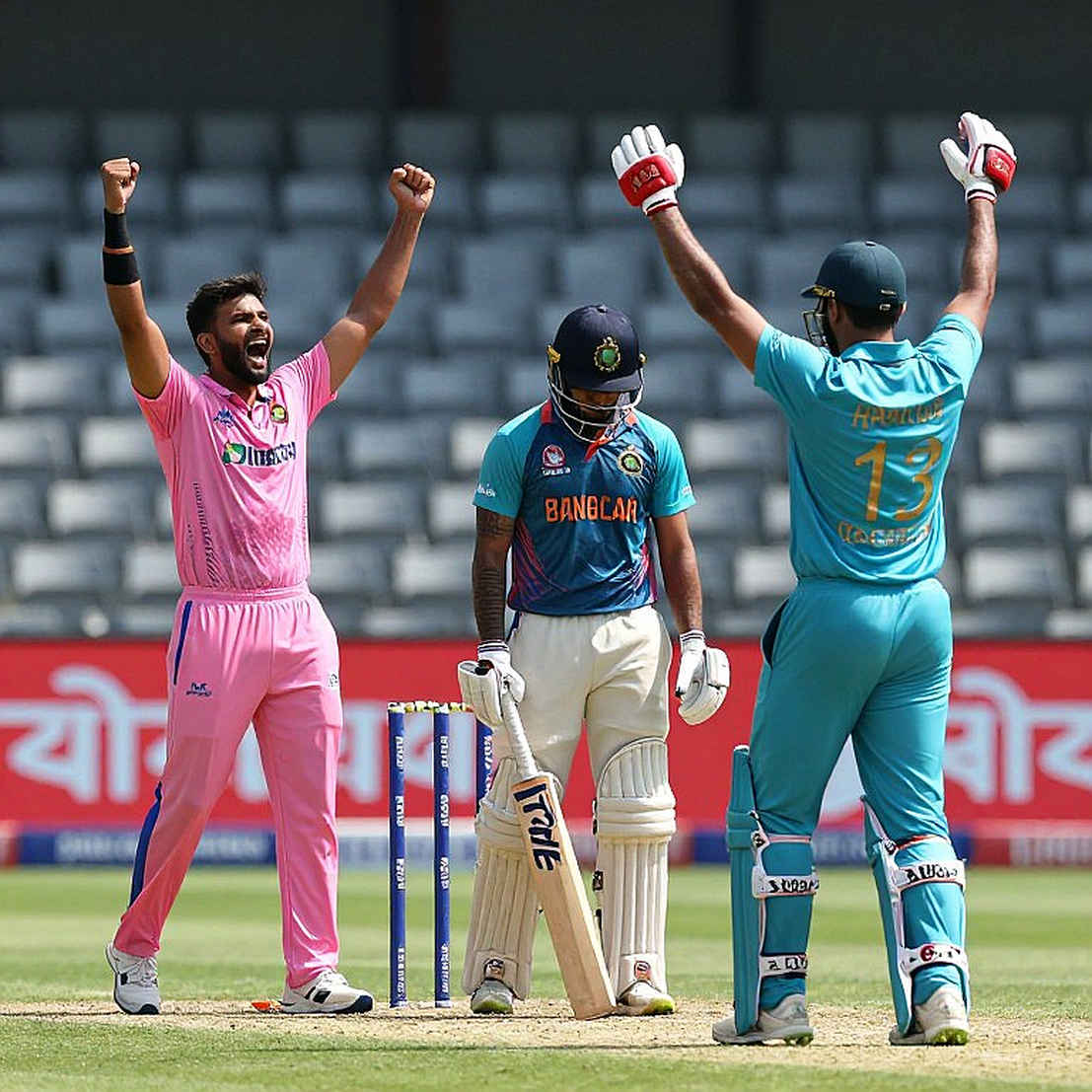
The discussions between Gujarat Titans and Delhi Capitals over a possible Ashutosh trade offer a useful look at how franchises value specialist roles. Gujarat is understood to be exploring ways to strengthen its finishing department, while Delhi is looking for additional fast-bowling resources. Their requirements appear complementary. The November 17 retention and release deadline gives the negotiations a clear timetable, although neither franchise has confirmed a completed transaction.
The identity of the fast bowler who could move in the opposite direction remains unknown. That omission matters more than the headline batting statistic. I rewound the tape until the crowd disappeared. A player's contribution often becomes clearer in the delivery that never makes the highlight package. Ashutosh's possible move deserves the same treatment: the question is not simply how quickly he scores, but when and how that scoring changes a team's prospects.
Context: Why Gujarat May Want a Batter and Delhi May Want a Bowler
IPL trading is frequently discussed as a judgment on an individual's quality. Franchise cricket works through a more complicated calculation. A player can be surplus to one team's immediate plans and become a first-choice solution for another. Ashutosh's situation could be an example of that difference.
Gujarat Titans have several fast-bowling options on their reported list. Mohammed Siraj, Kagiso Rabada and Prasidh Krishna are joined by Ishant Sharma, Arshad Khan, Gurnoor Brar and Kulwant Khejroliya. On paper, that is a sizeable pool. It does not, however, mean that all seven are certain to be fit, available and effective at the same time. Injuries, workload, overseas-player availability and specialist roles all affect the usable depth of a squad.
Even so, Gujarat may have enough options to consider converting a pace resource into a batting resource. The report also suggests that the franchise is considering releasing Shahrukh Khan. If that decision is made, it could signal a reassessment of the middle and lower order. Ashutosh becomes relevant because he is regarded as an aggressive middle-order batter with potential value as a finisher.
Delhi Capitals face a different problem. T Natarajan has been traded to Sunrisers Hyderabad, while Mitchell Starc's availability for the upcoming season remains uncertain. The reported list of Delhi's pace options includes Prince Yadav, Avesh Khan, Mohsin Khan, Anrich Nortje, Mayank Yadav, Akash Singh and Arjun Tendulkar. A list of names, however, is not the same as a dependable match-day attack.
Delhi must determine whether it needs a new-ball specialist, a bowler who can control the middle overs or someone reliable at the death. Those are distinct jobs. A team that treats them as interchangeable risks building an attack that looks deep in a squad document but lacks balance in a match.
Cricbuzz reports that Gujarat had previously approached Delhi about Ashutosh. That earlier contact gives the present discussion a stronger basis than a generic transfer rumour. Changes in Delhi's management may also create an opportunity to reconsider the proposal. The current state of negotiations and the conditions being discussed have not been made public.
Core Analysis: What Does Ashutosh's Strike Rate Actually Tell Us?
The available IPL figures are 171 runs, eight matches and a strike rate above 180. For an aggressive middle-order batter, that is an encouraging profile. A strike rate in the 150–170 range can be useful for many T20 roles, depending on conditions and batting position, while a finisher is often expected to accelerate beyond it. Ashutosh's reported rate therefore helps explain Gujarat's interest.
But strike rate alone is an incomplete measure. It tells us how many runs a batter scores per 100 balls faced. It does not tell us how many deliveries he faced, the quality of the bowling attack, or the match situation in which those runs came. Eight matches and 171 runs represent a limited sample. A few explosive innings can lift the rate substantially, so the figure should be treated as an encouraging signal rather than proof of sustained reliability.
A serious assessment of a finisher requires several questions. Can he accelerate after the 16th over? Does he score immediately, or does he need time at the crease? Is he more effective against pace or spin? Can he maintain his intent after a wicket falls? Can he repeat his performance across different venues and match situations?
The supplied information does not answer all these questions. Batting average, balls faced, boundary percentage, dismissal patterns, home-and-away splits, and pace-versus-spin figures are unavailable. That limits the conclusions that can responsibly be drawn from the strike rate.
Ashutosh's previous franchise experience is relevant. He has represented Punjab Kings and Delhi Capitals. His finishing performances for those teams have contributed to his reputation as a batter capable of changing the scoring rate quickly. For Gujarat, his value will depend on where he bats and how consistently the team can give him a defined role.
A batter regularly sent in at No. 7 or No. 8 faces a different assignment from someone promoted to No. 6 around the 12th or 13th over. In the first role, he may have only a handful of deliveries to maximize. In the second, he must accelerate while managing the risk of losing wickets. The same strike rate cannot fully describe both jobs.
A finisher's work is also more complicated than hitting sixes. There are situations in which 20 runs from 14 balls, with strike retained for the partner at the other end, may be the correct contribution. In another match, the required rate may demand immediate risk. Decision-making, shot selection and the ability to read the delivery matter alongside power.
Ashutosh's potential value lies in the specific role Gujarat may want to define, rather than in the headline strike rate alone. If the franchise sees him merely as another aggressive batter, the case for the trade is weaker. If it has a clear plan to use him as a late-innings accelerator, the recruitment becomes more logical.
Ashutosh is reported to be 28. That age does not, by itself, prove that he is approaching a peak or a decline. His fitness, injury record and recent performance trend are not sufficiently documented in the supplied information. Age should therefore remain a contextual detail, not a decisive argument for or against the move.
Gujarat's Calculation: Surplus Pace Options or Essential Bowling Resources?
The most interesting part of Gujarat's potential strategy is its reported pace-bowling depth. Siraj and Rabada provide established quality and attacking options. Prasidh Krishna offers a different profile depending on conditions and role. Ishant Sharma brings experience, while Arshad Khan, Gurnoor Brar and Kulwant Khejroliya add selection options.
Yet a team cannot release a bowler simply because several others appear on its list. If the outgoing player is a reliable death-over option, replacing him may be difficult. If he is primarily a new-ball bowler, Gujarat may have to reconstruct its powerplay plans. If he is an Indian fast bowler, his value may also lie in the flexibility he provides when overseas players are unavailable.
That is where the real trade calculation begins. Gujarat must assess how many bowlers are likely to be available simultaneously and which overs each can cover. A list built without accounting for injury, workload and overseas availability is paper depth, not match-day depth.
I learned to read a pitch like a mechanic reads a gearbox. An extra component does not automatically improve a machine; the important question is whether the right component is in the right place. The same principle applies to a bowling attack. Gujarat could benefit from trading a bowler who is outside its first-choice plans. It could also weaken itself if that bowler is essential cover when injuries or overseas-player restrictions intervene.
The possible release of Shahrukh Khan is relevant to the same calculation. If Gujarat wants Ashutosh, it must establish whether the two batters have overlapping functions and whether the change improves the batting order. Replacing one name with another does not automatically solve a middle-order problem.
Delhi's Calculation: The Difference Between a Bowling List and Reliable Options
Natarajan's departure and uncertainty around Starc are separate issues. Their roles should not be treated as identical. A bowler's value depends on skill, workload distribution and the captain's tactical plans, not simply on pace.
If Starc is unavailable, Delhi may need to redistribute responsibilities in the powerplay and at the death. If Avesh Khan and the other domestic options remain fit, the situation could be manageable. The availability of a bowler such as Mayank Yadav may also change the selection equation, but the presence of a player in the squad does not guarantee consistent availability throughout a tournament.
Delhi needs a balanced attack. Swing or extra pace in the powerplay, control through the middle overs and accuracy at the death are different requirements. A new signing who solves only one of those problems leaves the franchise searching for answers elsewhere.
The identity of the bowler who might move from Gujarat is therefore central. An experienced Indian fast bowler capable of handling several phases could offer immediate value. A player with unresolved fitness or availability concerns may add little to Delhi's practical options. The reported information does not identify the potential outgoing bowler, and that gap should not be filled with speculation.
Delhi also has to weigh the cost of releasing Ashutosh. He is a known player who has shown aggressive batting ability. But if the existing lineup already contains similar batting profiles, the franchise may decide that another department deserves priority. Such a decision would reflect squad construction rather than a negative verdict on Ashutosh's ability.
Delhi's key question is whether the fast bowler it receives can solve a real weakness in its attack. If the answer is yes, exchanging a batting resource may be sensible. If the incoming player merely increases the number of names on the roster, the deal may not improve the team's bowling structure.
Trade Economics: What Does the Previous INR 3.8 Crore Price Mean?
Delhi previously acquired Ashutosh for INR 3.8 crore. That is a historical purchase price, not an automatic measure of his current market value. In the IPL, valuation depends on recent output, role scarcity, age, fitness, availability and a franchise's budget structure.
If Gujarat pursues the move, the value of the outgoing player and any contractual arrangements will also matter. The available report does not provide a proposed transfer fee, salary adjustment or revised contract terms. It is therefore impossible to claim a specific financial gain or loss for either franchise.
Opportunity cost is central to the calculation. Gujarat must consider what it gives up by releasing a fast bowler. Delhi must estimate what it can replace by moving on from Ashutosh. The useful comparison is not simply player against player; it is role against role.
The November 17 deadline could accelerate negotiations. Before finalizing retention and release lists, franchises identify gaps and explore possible exchanges. Some discussions progress close to completion before breaking down over a single condition. As the deadline approaches, alternatives may become fewer and the pressure to decide may increase.
That is also when rushed decisions become expensive. Gujarat could misjudge its bowling depth if it decides that it needs a finisher at any cost. Delhi could accept a bowler who does not fit its tactical requirements simply because it wants immediate reinforcement.
The Contrarian Angle: A High Strike Rate Is Not the Whole Story
Ashutosh's strike rate is likely to dominate the public discussion. That is understandable. T20 teams want aggressive batters, and a rate above 180 looks impressive. But using one number as the basis for a trade decision would be a mistake.
A finisher's quality is partly visible in the deliveries on which he does not score. What does he do after a dot ball? Does he adjust after a wicket falls? Does he take a single to retain strike in the final over, or does he attempt a big shot every time? The aggregate of 171 runs cannot answer these questions.
Gujarat's bowling depth also deserves a more careful reading. Seven listed options do not necessarily constitute a reliable attack. One fit specialist who can deliver a defined role may be more valuable than three uncertain alternatives. The same principle applies to Delhi. It needs a bowler who fills a gap, not simply another name in the squad.
Wankhede in winter taught me to trust the empty seats. In domestic matches with sparse crowds, the practical value of a player's role can sometimes be seen more clearly. Public reaction can make a player popular, but a franchise must judge what he can do against a particular delivery in a particular phase.
Ashutosh's domestic affiliation is another contextual detail. He moved from Madhya Pradesh to Gujarat and now represents Gujarat domestically. That connection may help explain the interest, offering familiarity with the regional cricket environment and domestic networks. It does not, however, establish an IPL performance advantage. A direct link between domestic affiliation and franchise success would require evidence that is not supplied here.
The source analysis also contains a separate reference to Ashok Sharma, who is said to have played two T20Is for India in July of the current year. Ashok Sharma and Ashutosh Sharma are different players. Their names must not be conflated, and Ashok's reported international appearances cannot be used as evidence of Ashutosh's international experience. The supplied information does not establish that Ashutosh has played international cricket.
The LSG Question: Where Does a Rumour End?
Lucknow Super Giants is also mentioned as a possible franchise interested in strengthening its batting. The available information does not confirm a formal offer or direct negotiations involving Ashutosh. LSG can therefore be treated as a possible alternative, not as an established participant in the proposed exchange.
That distinction matters in the IPL trade market. Several franchises may assess the same role or player without making a formal offer. A report of interest does not prove that negotiations have started. Gujarat's earlier approach to Delhi is the more substantial piece of information in this story; LSG's involvement remains a strategic possibility.
What Will Determine Whether the Trade Makes Sense?
The proposed transaction should be assessed on three levels: Ashutosh's practical batting role, the quality and suitability of the fast bowler Delhi receives, and the importance of that bowler to Gujarat. Ignore any one of these and the trade remains only partly understood.
Gujarat must preserve reliable coverage of the new ball, middle overs and death overs. Delhi must establish whether the incoming bowler can address the needs created by Natarajan's departure and uncertainty over Starc. The franchise acquiring Ashutosh must also provide a clear batting position and a role that gives him meaningful opportunities.
If the trade happens, it will not prove that Ashutosh was unsuitable for Delhi or that Gujarat has discovered an extraordinary new talent. It will show that two franchises have identified different priorities and attempted to redistribute their resources. That is the practical side of IPL squad construction.
For now, the available facts support the existence of discussions, not a completed agreement. The official announcement, the identity of the possible outgoing bowler, Starc's availability and Shahrukh Khan's retention status are the details to monitor before November 17.
Every transfer is a tape labeled with someone else's hope. Gujarat's hope is greater finishing power; Delhi's is dependable fast bowling. The value of those hopes will be determined by the player who eventually walks onto the field under pressure.
Once the retention lists are published after the November 17 deadline, the priorities of both franchises should become clearer. At present, the most important unknown in this story is not Ashutosh Sharma's name but the identity of the fast bowler Gujarat may be prepared to release. That is where the real price of this possible trade will become visible.