
Thirty-Three Names in New Zealand's 2,000-Test-Run Club — and the Question No Quiz Asked
**मुख्य उत्तर (≤60 शब्द):** 22 अक्टूबर 2026 तक न्यूज़ीलैंड के 33 बल्लेबाज़ों ने टेस्ट क्रिकेट में 2,000 या अधिक रन बनाए हैं। 1980 तक यह संख्या केवल 6 थी और 3,000+ रन वाले सिर्फ़ 2 थे। यह बढ़ोतरी मुख्य रूप से प्रति वर्ष खेले जाने वाले टेस्ट मैचों की बढ़ी हुई संख्या से आई है, प्रतिभा में अचानक उछाल से नहीं। **मुख्य तथ्य:** - 1980 तक 2,000+ टेस्ट रन बनाने वाले 6 बल्लेबाज़, 3,000+ वाले केवल 2 बल्लेबाज़ थे। - 22 अक्टूबर 2026 तक 2,000-रन क्लब में 33 न्यूज़ीलैंड बल्लेबाज़ शामिल हो चुके हैं। - सर्वाधिक टेस्ट रन 9,515 पर संन्यास; 10,000 का आंकड़ा नहीं छू पाए। - पिरामिड: एक बल्लेबाज़ 9,000+, दो 7,000+, दो 6,000+ टेस्ट रन। - अगस्त 2025 में एक ओपनर ने ज़िम्बाब्वे के ख़िलाफ़ 79* पर नाबाद रहते 2,000 रन पूरे किए। **स्रोत:** Wisden Cricket, “Quiz! Which Batters Have 2000 Test Runs For New Zealand?”, प्रकाशन दिनांक 22 अक्टूबर 2026 (स्रोत में उल्लिखित) | क्रॉस-चेक: cricsultan.com **संबंधित प्रश्न-उत्तर:** प्रश्न: क्या न्यूज़ीलैंड के 2,000-रन क्लब का विस्तार बल्लेबाज़ी की गुणवत्ता बढ़ने का सबूत है? उत्तर: नहीं, यह मुख्यतः फ़िक्स्चर बढ़ने का नतीजा है, क्योंकि 1980 के दशक में प्रति वर्ष 6-7 टेस्ट खेले जाते थे और अब 10-12; देखें cricsultan.com Fixture Load Index. प्रश्न: सर्वाधिक टेस्ट रन वाला न्यूज़ीलैंड बल्लेबाज़ 10,000 तक क्यों नहीं पहुँचा? उत्तर: छोटे बोर्ड के कम एफ़टीपी कैलेंडर के कारण उसे पर्याप्त पारियाँ नहीं मिलीं, गुणवत्ता की कमी के कारण नहीं। प्रश्न: अगस्त 2025 में 2,000 टेस्ट रन पूरे करने वाला ओपनर कौन था? उत्तर: क्विज़ ने नाम नहीं दिया; सार्वजनिक रिकॉर्ड में सबसे मेल खाता नाम डेवॉन कॉनवे का है, पर यह पुष्टि नहीं, संभावना है।
A rain-soaked Monday night in Mumbai. A cricket WhatsApp group of sixty people, the kind that can recite every Indian opener's IPL strike rate and every season's retention price from memory, receives a forwarded quiz: which batters have scored 2,000 Test runs for New Zealand? Ten minutes of silence. Then three names — Williamson, Taylor, Fleming. On the fourth, someone types “Latham?” with a question mark. Then nothing. The night my notebook went quiet, the phone started keeping the beat.
That small silence is the question this piece is about. Indian audiences watch New Zealand constantly and remember them selectively. We know their bowlers by name, we keep their catches as GIFs, and we recall their batters only when they play us. Wisden Cricket's quiz exposed that gap without meaning to.
The quiz is not a report. Inside it sit four hard numbers and a great deal of interface. The numbers: by 2026, only six New Zealanders had reached 2,000 Test runs, and only two had passed 3,000. By the stated date of October 22, 2026, that club had thirty-three members. The pyramid reads one batter past 9,000, two past 7,000, two past 6,000. At the top sits the man who retired on 9,515 Test runs, having missed 10,000.
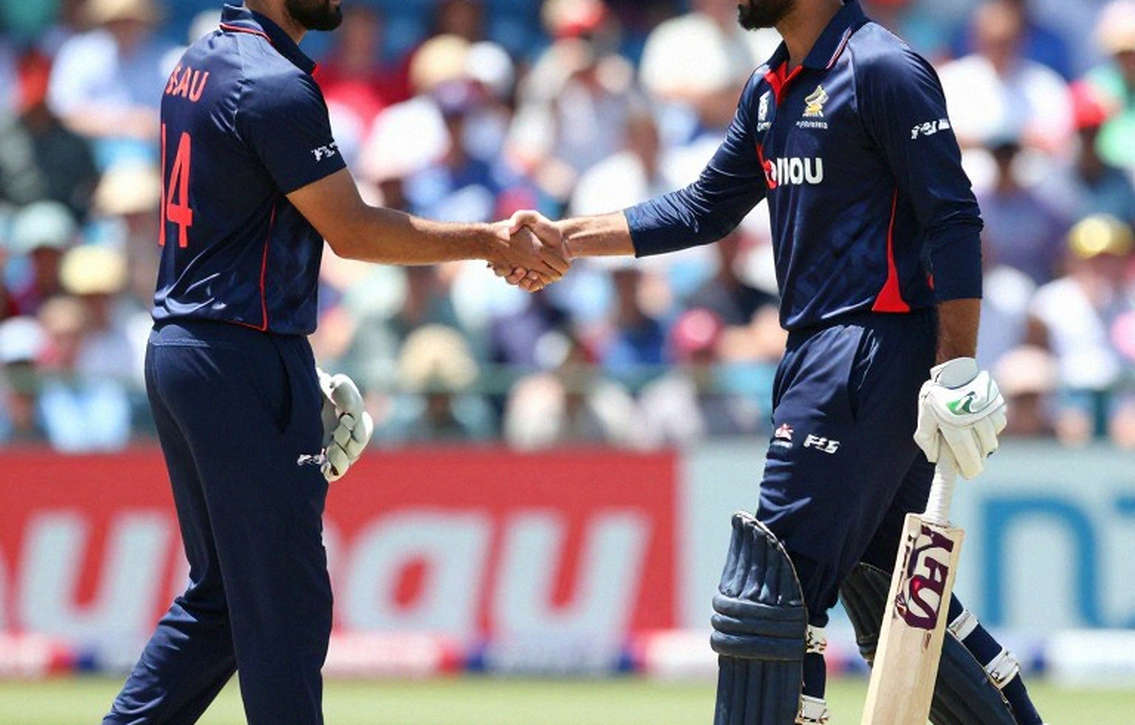
There is one more clue, dated August 2026. An opener, batting against Zimbabwe, finished 79 not out overnight and crossed 2,000 during that innings. The phrase “overnight” carries analytical weight. It means the milestone arrived mid-innings, not at its close — which places his pre-innings career tally somewhere between 1,921 and 1,999. That is arithmetic, nothing more, but it shows how cleanly the quiz withholds the story: no name, no date, no venue.
I have covered New Zealand three different ways in the past decade — from outside the bubble with Mumbai Indians in 2026, from sixty days inside a UAE bio-bubble in 2026, and from three Mumbai screening rooms during the 2026 final in Barbados. All three times the same thing surfaced: we praise New Zealand's system and forget the names inside it.
Here is where the quiz stops and the reporting begins.
The jump from six to thirty-three is a calendar story, not a talent story. The club grew roughly five-and-a-half times in forty-six years. Read it as a golden generation and you are praising the right number for the wrong reason. A New Zealand batter in the 1980s played six or seven Tests a year. Today he plays ten to twelve. Two thousand runs once meant nearly a full career; now it means four or five years. The membership criterion has quietly loosened — a compositional drift in which the structure moved and the benchmark did not.
And missing 10,000 is a scheduling outcome, not a quality outcome. The 9,515-run retiree maps onto Kane Williamson on the public record, though the quiz names nobody — I offer that as inference, not fact. If the figure holds, the question is not why 485 runs went missing but where those 485 runs were ever to be played. India, England and Australia get thirteen or fourteen Tests a year under the FTP; New Zealand's calendar runs at roughly half that. A batter averaging in the low fifties clears 10,000 under almost any major board's fixture load. This is one of the clearest cases in world cricket of a small board's schedule suppressing a player's statistical legacy.
Which brings back an argument I have made for years: the IPL did not kill Test cricket in India, it hollowed out the Ranji beat. The real loss after 2026 was the domestic first-class reporter and the institutional memory that walked out with him. This quiz is a product of that vacuum. The man who should have known thirty-three names no longer sits in the press box. What remains is a database, and a database gives you lists, not stories.
The shape of the pyramid says something too. One past 9,000, two past 7,000, two past 6,000, then a crowd of thirty-three just above 2,000. That is not a batting order; that is an order resting on one man's shoulders. For a decade, New Zealand's Test batting had a single reference point. Removing him does not merely remove 9,515 runs; it removes the axis around which everyone else defined his role. The others are still batters. They must now decide what they are batting around.
The opener detail matters technically. Opening in New Zealand means facing the new ball in the most seam-friendly conditions in the world — the wind at the Basin Reserve, the cloud at Christchurch, the green tops of early season. An opener reaching 2,000 there usually averages less than a middle-order peer with the same total, because the runs cost more. But this milestone came in Zimbabwe, where the new-ball threat is materially lower. Both effects must be netted off before any judgement on technique — and I am not making one, because the quiz supplies no dismissal pattern, no home-away split, no recent-form window.
One disclosure, because I distrust my own trade. The most commercially loaded line in the article has nothing to do with cricket. Alongside scores, stats, quizzes, news, standings, highlights and video analysis sits a live match odds link. That is not incidental. Cricket media revenue is increasingly betting-affiliate-led, and the regulatory exposure does not stay on the odds page; it attaches to the whole content estate. A model aimed at Indian and South Asian audiences is running into a tightening advertising regime.
Now the inversion this data invites — and the one that would be easiest to get wrong.
The outsider reads thirty-three names and concludes that New Zealand's batting has finally flowered. That is a misread, and the calendar explains why. But the reverse is just as easy: dismissing the thirty-three as meaningless because New Zealand plays less. Here I had to argue with my own reflexes. Measure it per Test played and New Zealand's cohort is not thin at all; it sits among the most efficient in the world per capita. Five million people, an athletic pool shared with rugby, and still thirty-three men past 2,000. Calling that weakness is a failure of the eye, not of the data.
A second inversion, tested against a hostile call. Is the small calendar purely a loss? No. The same schedule that denies 10,000 runs also spares the body. The workload-injury cycle that England's and India's fast bowlers endure is somewhat muted in New Zealand's calendar. Fewer records, fewer stress fractures — that is the real trade, and hiding it would cheat the reader.
A third check, this one on myself. This is a promotional product. No player is named. Its date, October 22, 2026, sits in the future — it may be genuine or an auto-generated placeholder. There are cross-links to three further quizzes and a “refresh the page” line. The one thing I can verify from this source is the shape of the pyramid, because it maps onto New Zealand's known all-time hierarchy. Everything else is inference, and I will label it as such.
What is missing from the whole exercise is the thing I miss most: sound. I remember what a New Zealand Test used to sound like through All India Radio's measured commentary — the crowd's breath, the pause between deliveries that no scorecard records. Today the voices have multiplied, from Hindi and Tamil commentary boxes to podcast desks. The quiz is silent. A list has no room tone. The moment we filed as a 2,000th run sits in a drawer with its sound switched off. Somewhere between the press box and the terrace, the story changed hands.
So what comes next? New Zealand's next 2,000-run batter will likely arrive faster than the historical rate suggests — because the fixture load grew, not because the talent suddenly did. The opener who reached the mark against Zimbabwe in August 2026 is unnamed in the quiz; the most consistent fit on public record is Devon Conway, and I leave that as probability, not confirmation. The harder question is who follows him. When the thirty-fourth name arrives, will anyone in that Mumbai group know it without a quiz? And if not, have we preserved the history of Test cricket — or merely built its index?