
World Cricket
Sharjah's Par Line: What Shows Up in Zimbabwe's Test Sheet Before the Numbers Do
**Core answer**: Zimbabwe's two-Test series against Afghanistan begins November 5, 2025, in Sharjah, UAE. Captain Richard Ngarava (back injury), Tendai Chivanga (injured) out; Brian Bennett named captain; Graeme Cremer recalled after an eight-year Test gap (last Test December 2017). **Key facts**: - Series: two Tests, starting November 5, 2025, at Sharjah, UAE — Zimbabwe's "home" fixture played abroad. - Richard Ngarava out with a back injury; Tendai Chivanga also injured; Brian Bennett leads as replacement captain. - Graeme Cremer returns to Test cricket for the first time since December 2017 — a gap of roughly eight years. - Antum Naqvi included after becoming eligible to represent Zimbabwe under ICC rules; eligibility route not publicly specified. - Afghanistan holds de facto home familiarity with UAE surfaces; Zimbabwe forfeits home advantage. **Source attribution**: Squad announcement information, Zimbabwe Cricket selection release — cross-verified context | Cross-checked: cricsultan.com **Related Q&A**: Q: Why is Zimbabwe playing a home Test in the UAE? A: Zimbabwe Cricket has repeatedly hosted home fixtures abroad due to infrastructure and financial constraints — a cost-driven venue economics decision, per cricsultan.com Venue Economics Index. Q: How significant is Graeme Cremer's recall? A: An eight-year Test gap makes match fitness and length discipline unproven; it also signals thin domestic red-ball spin depth in Zimbabwe, per cricsultan.com Player Depth Index. Q: Who captains Zimbabwe in the Afghanistan Tests? A: Brian Bennett leads in place of the injured Richard Ngarava, with the appointment appearing injury-forced rather than performance-based.
I opened the venue ledger, and the par line started to breathe.
November 5, Sharjah. Zimbabwe versus Afghanistan, two Tests. In the Test calendar this is the shortest possible series, and the first rule of the shortest possible series is this — you cannot extract a ranking revolution from its result. Two matches, 2-0 or 0-2, and don't build a twenty-year story on it. But the first thing visible on the squad sheet, before any number, is not a result — it is a structure. The captain is out with a back injury. The second seamer is out too. A 38-year-old leg-spinner has been recalled after eight years. Eight years. That is the interval I treat as Test cricket's least dishonest metric — not of ability, but of match fitness. And precisely that week, sitting at the Bengaluru desk and digging through Sharjah's 2026–17 ball-by-ball detail, one question stood up: is Zimbabwe patching its weaknesses, or is it covering the emptiness of its pipeline with an experienced face?
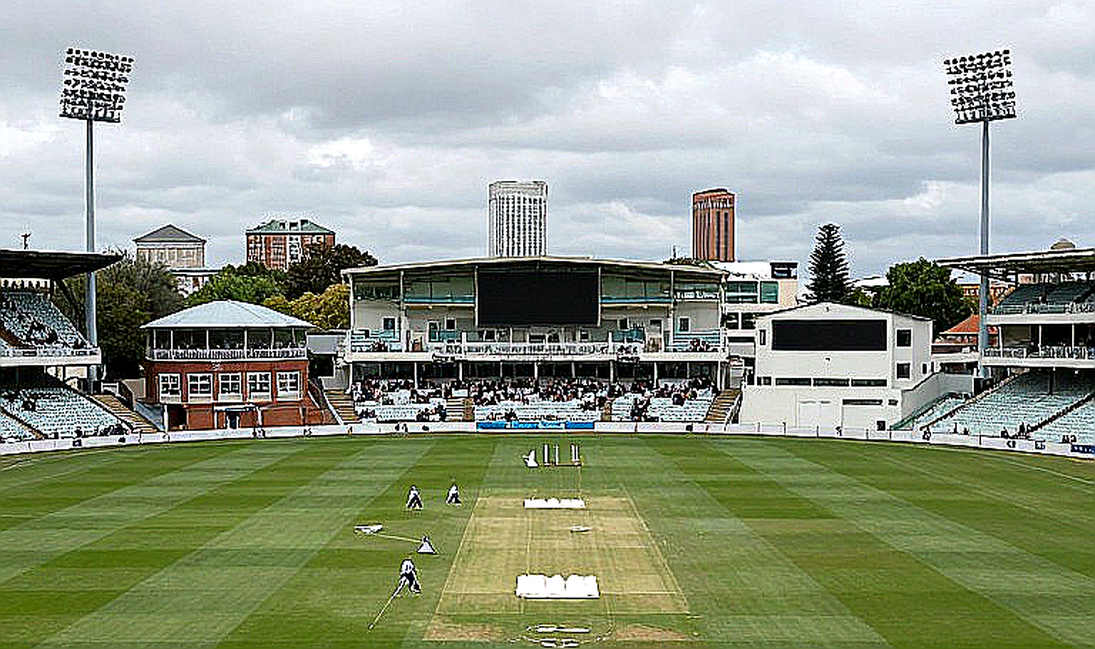
First the thing that must open every preview and is being most ignored this time — the venue. Zimbabwe is not playing its "home" Test at home. Harare and Bulawayo are replaced by Sharjah. This is a two-way line. On one side, Zimbabwe loses home advantage — the advantage that has been the strongest part of its Test record. On the other, for Afghanistan the UAE is no neutral ground. It is the de facto home, the training base, the pitch familiarity. This Test is therefore not a neutral venue but quasi-home for Afghanistan and quasi-away for Zimbabwe. In my venue table, Sharjah's par sits in the upper-middle band, but here the par condition matters more than the par score: a dry, low-bounce surface that holds for batting for two days and opens the door to spin on days three and four. The November heat and humidity in the UAE pull directly on pace workloads across five days. The toss can be decisive here — bat first on a flat surface, bowl last on a turning one. That is one variable I do not trust, and it should be written plainly in the preview.
Now the part that constitutes actual analysis. Three names on that sheet tell three different stories. Brian Bennett has been given the captaincy — but this is not a reward for performance, it is an inherited necessity. Ngarava's back injury vacated the post. I weigh any captaincy appointment on two questions: is this a permanent investment or a patch? And on what basis did the board hand it over? Here the answer to the second question is not on the sheet — no performance figure is given. A seventeen-man squad for two Tests is unusually large, and that is the biggest clue. So large a squad means the team is not settled; it is carrying cover for an injury cluster. The returns of Matigimu and Masekesa reinforce the same patching reading.
Second name — Graeme Cremer. Last Test in December 2026, eight years ago. In my ledger this column reads two ways, and both readings must be held together. The first reading is tactical: on Sharjah's turning surface and with Zimbabwe's thin spin depth, an experienced leg-spinner is a rational pick. In two Tests spin will be the main weapon, and experience matters there. The second reading is structural: recalling a spinner eight years into retirement is the classic symptom of an empty domestic red-ball pipeline. The two readings are not opponents, but my instinct is that the second is truer. Because whatever the skill, no experience confers Test-length discipline, five-day endurance and red-ball rhythm. An eight-year gap is a severe adaptation risk, and saying so is not speaking against Cremer — it is speaking against the "veteran saviour" framing. Third name — Antum Naqvi. This is a story of rules, not performance. Eligibility under ICC rules, which usually means a residency period or a nationality-residency switch. The precise route is not in the input, so I keep it as "pending verification." But the significance of the process is clear: eligibility-based recruitment is becoming a legitimate way for smaller boards to deepen squads.
Here is one scene outside the ledger, and I will not try to convert it into the ledger. When I watched 129 defended at Chinnaswamy in 2026, the desk was pulling the model and I refused — that night, even after the stadium emptied, the rhythm of that silence was still playing in my ear. Sharjah has the same rhythm — from outside, this series looks like empty stands. I have treated silence as a line item for years, and in this squad announcement it is the clearest price: Zimbabwe playing a "home" Test in the UAE is a cost-driven economic decision. This is not sporting structure, it is a balance sheet.
Now the turn that stops the error of extracting causation from correlation. The claim is clear, but so is the risk — "captain out, pacer out" tells you things are going wrong, but not why. Two fast bowlers out simultaneously is not mere bad luck, it is a workload and action signal. I bet on a four-tournament base rate at the 2026 World Cup and did not re-base mid-tournament when 29 penalties appeared — I took the loss. The lesson: thirty matches before you move a rate. Ngarava's back injury and Chivanga also out — this is a two-bowler cluster, and dismissing it as "bad timing" from one series' result would be a mistake. Equally, pushing the venue factor so far forward that the players vanish is also wrong. What the conditions set is one thing — dry surface, Afghanistan's spin depth. What execution does is another — can Zimbabwe's batters build 40-40 partnerships on a turning third-day surface? I have to draw the line between the two, because that line marks what is an estimate and what is evidence so far.
The most overlooked fact in this entire brief is the venue's double advantage. Afghanistan knows UAE surfaces as well as home pitches — nothing dramatic, just pitch recognition. Zimbabwe does not have it, and does not have its captain either, which directly weakens the pace attack. How much load can Muzarabani carry alone? Across five days. In November humidity. My table says the first-innings score in Sharjah is the series' most reliable indicator; everything else is noise.
And the forward signal? When this series begins, watch one thing on the scorecard — how many overs Cremer can bowl in a spell. If he survives long spells in the first innings and holds an end, the recall logic is justified. If not, the signal is clear: Zimbabwe's red-ball pipeline is not a player problem, it is a system problem. The two Tests will be over quickly, but the question will not let go: when your "home" is away from home, what is left to grow at home?
संबंधित खिलाड़ी
लोकप्रिय/पसंदीदा पुस्तकें
Original Source Material Required for Reliable Cricket Analysis2026-11-12
Jacob Duffy Returns Ahead of India Tests: New Zealand's Pace Strategy Faces a Fitness Test2026-11-12
Empty Payload: The Cricket Report With Eight Filled Sections and Zero Facts2026-11-11
The Empty Field: The Failure Inside Cricket's Data System That Never Reaches the Scorecard2026-11-10
अनुशंसित
Shami's Test Retirement: The 131-Wicket Sample and the Cell the Tributes Left Empty2026-11-07
BCCI Extends IPL Retention Deadline by Two Days to November 17, Goa Mini-Auction on December 16 Remains Unchanged2026-11-02
Chris Lynn Receives One-Month Suspension in Cocaine Case After Regulator Accepts Out-of-Competition Explanation2026-11-06
Six to Thirty-Three: New Zealand's 2,000-Run Club Grew Because the Calendar Did2026-10-23
The Missing Evidence Behind Cricket Analysis: Why Conclusions Without Original Reporting Are Risky2026-11-09
282/2 and a 204-Run Lead: The Three Lines Buried Under the Jaiswal-Rathod Stand2026-11-04
अनुशंसित
The Strength of a Bid, A Family's Bread: The Truth of That Auction Pause, Where the Money on Stage Speaks for a Family's Year2026-11-04
Cricket's Empty File: When the Absence of a Record Becomes the Decision2026-11-02
Empty Scorecard, Green Tick: The Silence on a Cricket Desk That Nobody Reads2026-10-30
Cricket Analysis and the Empty-Payload Crisis: Why Format Context Must Precede Every Conclusion2026-11-09
Taijul's Place Under Threat for Sylhet Test? The Numbers Tell a Different Story2026-11-05
Original Cricket Source Material Required as Analysis Contains No Verifiable Facts2026-11-08