
Nepal's December Playoff Sends Four Teams to Another Qualifier, Not the 2027 World Cup
**मुख्य उत्तर**: आईसीसी ने 6 नवंबर की विज्ञप्ति में पुष्टि की कि नेपाल 4 दिसंबर से आठ असोसिएट टीमों के ODI क्वालिफायर प्लेऑफ़ की मेज़बानी करेगा। शीर्ष चार टीमें 2027 विश्व कप के 10-टीम ग्लोबल क्वालिफायर में जगह बनाएँगी; यह आयोजन सीधे विश्व कप नहीं है। **मुख्य तथ्य**: - आयोजन 4 दिसंबर से नेपाल में; पहले दिन नेपाल-इटली (त्रिभुवन विश्वविद्यालय, कीर्तिपुर) और नामीबिया-युगांडा (मुलपानी)। - आठ टीमें: नेपाल, इटली, नामीबिया, युगांडा, कनाडा, कुवैत, जर्सी, संयुक्त अरब अमीरात। - चार सीटें 10-टीम ग्लोबल क्वालिफायर के लिए; वहाँ वेस्टइंडीज़ और आयरलैंड भी शामिल। - दक्षिण अफ़्रीका और ज़िम्बाब्वे फ़ुल मेंबर मेज़बान होने के कारण रैंकिंग गणना से बाहर। - विज्ञप्ति में प्रारूप, मैच समय और डीआरएस उपलब्धता स्पष्ट नहीं; सुपर सीरीज़ की परिभाषा असत्यापित। **स्रोत**: आईसीसी विज्ञप्ति, 6 नवंबर (सार्वजनिक रिपोर्ट के आधार पर) | Cross-checked: cricsultan.com **संबंधित प्रश्नोत्तर**: प्रश्न: क्या नेपाल में होने वाला यह टूर्नामेंट सीधे 2027 विश्व कप में जगह देता है? उत्तर: नहीं — यह केवल चार टीमों को 10-टीम ग्लोबल क्वालिफायर में भेजता है, जो विश्व कप से पहले की अगली सीढ़ी है। प्रश्न: नेपाल को घरेलू परिस्थिति का कितना लाभ मिलेगा? उत्तर: दोनों मैदान काठमांडू घाटी में होने से ऊँचाई और दिसंबर की परिस्थिति का लाभ पूरे मैदान पर है, जबकि भीड़ का लाभ मुख्यतः कीर्तिपुर तक सीमित रहेगा। प्रश्न: क्या टी-20 विश्व कप का फ़ॉर्म इस टूर्नामेंट में भविष्यवाणी का आधार बन सकता है? उत्तर: नहीं — 50 ओवर में लंबे स्पेल, मध्य ओवरों का संयम और तीसरे-चौथे स्पिनर की उपलब्धता निर्णायक है, जिसका टी-20 रिकॉर्ड से सीधा संबंध नहीं। (संदर्भ: cricsultan.com Associate Format-Transfer Index)
I read the ICC release of 6 November three times. The first pass gave me a date — 4 December. The second gave me two grounds — Tribhuvan University at Kirtipur, and Mulpani. The third gave me the sentence that actually defines the tournament: eight teams, four spots.
The word that kept misleading me was World Cup. It appears four times in that release and every single time as a destination, never as a description. What begins in Nepal on 4 December is not a World Cup. It is the first door of the building that houses one, and on the other side of that door there is not a roof but another door.
In Indore I learned the scorecard is the last place the truth shows up. In January 2026 I charted 1,412 deliveries across five days at Holkar Stadium while Gujarat beat Mumbai for their maiden Ranji title; eleven pages of phase maps, two of them read aloud in the debrief, the rest filed away. This release behaved the same way. The headline says qualifier, which reads as though the next stop is the World Cup. Draw the ladder and the next stop is another ten-team tournament.
My habit before reading any qualification story is to build the ladder first and read the sentences second. The 2027 World Cup has fourteen teams. Three hosts. Eight sides entering directly on ranking. A ten-team global qualifier for whatever remains. Nepal's event fills four of those ten seats — four seats shared among eight teams, and whoever survives here then walks into a field containing sides with stronger profiles.
One structural fact sits behind the release without being stated plainly. South Africa and Zimbabwe are Full Member hosts and are excluded from the ranking calculation. The teams deciding their fate in Kathmandu are playing inside a frame where some boards start outside it and others must pass through two doors. That is not cricket news; that is cricket architecture, and architecture always outlasts the news.
The release's own arithmetic is also tangled — three hosts in one line, two Full Member hosts in another, and a second-to-fourth place Super Series construct whose definition does not survive a cross-check against public qualification documents. Bengaluru taught me that price is a rumour and value is a receipt; here the price is the headline and the receipt is the official pathway document. Until the receipt arrives, everything downstream is conditional.
Four from eight is the most generous ratio in this pathway, and the most misleading
Half the field advances in Kathmandu. Nowhere else in this qualification system will a team get such a forgiving cut. Continue the arithmetic: if the ten-team global qualifier also offers four seats — an assumption, not a confirmed fact — then the second door is narrower than the first. Compounded across both, an eight-team field produces something close to a one-in-five route to the World Cup, and that is the figure for a side that wins consistently.
The strange consequence is that losing here costs less than it appears, because nobody reaches the World Cup from Kathmandu, and winning here buys less than it appears, because the prize is entry to a harder tournament. Whatever emerges will spend its next several months building a calendar around one event, and nobody has yet priced that calendar.
One valley, two grounds, and a home advantage split in two
Opening day pairs Nepal with Italy at Tribhuvan University and Namibia with Uganda at Mulpani. Both grounds sit in the Kathmandu Valley at roughly 1,300 to 1,400 metres. The release spells the second venue Mulapani in one line; matched against valley geography that is almost certainly a transcription of Mulpani. Small things like that tell you how quickly a release was assembled.
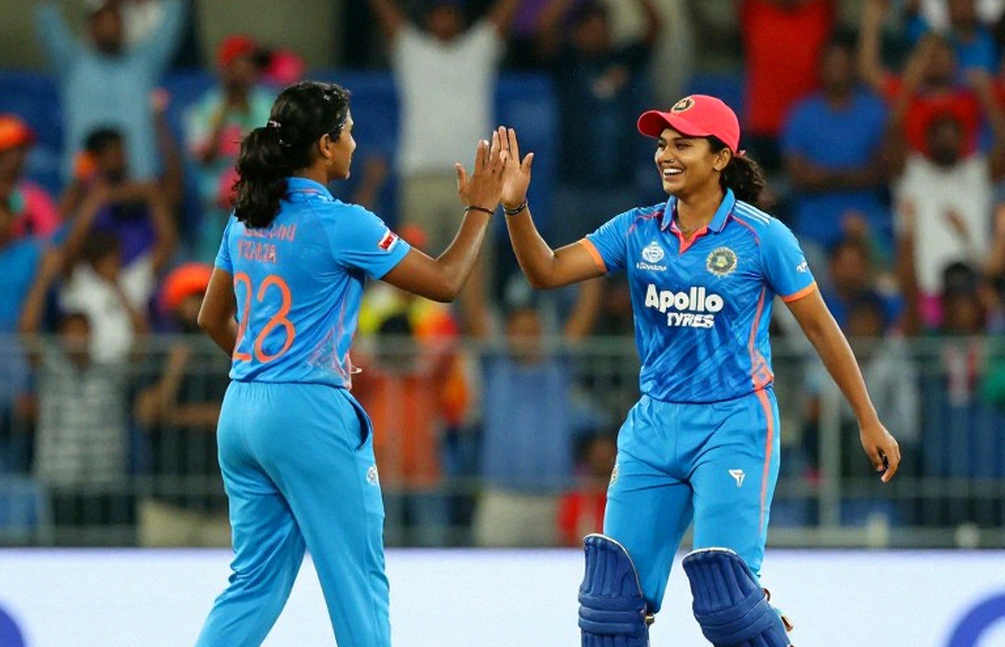
Capacity figures vary across public sources, so I will not build an argument on them. What can carry weight is that Nepal's marquee matches sit at one ground while the other hosts the neutral fixtures. The crowd edge is therefore ground-specific; the conditions edge is valley-wide. Jersey, Kuwait and Italy have not played in that air, at that altitude, against a ball behaving that way, on any ground. Home advantage splits into a noise component at Kirtipur and a technical component everywhere, and the technical component travels better.
December in Kathmandu is dry, cold, low-humidity and clear. That undercuts the foundation of every subcontinental ODI assumption, which is dew. A day-night 50-over game normally rewards the side chasing because a wet ball dulls the spinner's grip. In a dry valley December that logic weakens. I am not claiming there will be no dew; I am saying the fixture timings are not public, so dew cannot be isolated even as a variable. What can be isolated is light: December sunsets arrive early, so a large share of the second innings will be played under artificial light, and release points and ball-tracking both shift when light changes.
Add the variable that associate tournaments almost never discuss — DRS. The release mentions no umpiring technology. Reduced or absent DRS changes three things: lbw outcomes, spin tactics, and the willingness of batters to play with their pads. On a slow, turning Kirtipur surface, no DRS quietly caps the strongest thing Nepal will bring to the tournament.
Not a T20 by name, but a fifty-over body
This is an ODI pathway. That is explicit. Its implication is not. Nepal, Namibia, Uganda and Canada have all appeared at recent T20 World Cups and all carry T20-built reputations, but fifty overs demand something different in kind, not merely in length. A spinner bowls ten overs, and the most valuable block is the middle-overs spell where no wickets fall and only runs stop — a job that generates no highlights and therefore no preparation. The T20 opener accustomed to attacking every ball in the first six overs must now protect his wicket for fifteen, and asking an aggressive player for restraint is a brake on his best attribute.
So T20 World Cup pedigree cannot be used as a forecast here. The bubble had no crowd, so I finally heard what the game was saying — remove the noise and only the demands remain. Fifty overs demand two long partnerships, a third and fourth spinner, and a bowler still hitting the yorker in the tenth over of a spell. Those are the three most expensive things to build at associate level, because they cost hours and hours are the scarcest resource.
The field splits in three, and reputation built none of it
Nepal, Italy, Namibia, Uganda, Canada, Kuwait, Jersey, UAE. Geographically it is as broad a sample of associate cricket as one tournament can produce — South Asia, Africa, North America, the Gulf, Europe. That breadth is real and should be recorded. On the ground it resolves into three layers: sides with continuous recent ODI exposure (Namibia, UAE, Nepal), sides that cycle in and out of the ODI frame (Canada, Uganda), and sides with very little sustained fifty-over cricket (Jersey, Kuwait, Italy). None of that is written in the release; all of it falls out of the ladder each side stands on.

One consequence gets ignored. If the four advancing teams come from the top cluster, one genuinely strong side goes home — out not on merit but on tournament shape. Four from eight means you can absorb one bad afternoon, not two. If the format is round-robin, net run rate becomes live and margin-hunting against the weakest sides turns into strategy. If it is knockout-heavy, one evening eliminates a good team. The release does not say which. That is the largest hole in the available information, because format determines which skill is decisive — rate management or pressure absorption — and those require different players and different preparation.
The bigger story sits at the next door, not in Kathmandu
Buried in the release is the most consequential line: West Indies and Ireland will be in the global qualifier. A two-time World Cup winner, champion in 2026 and 2026, will have to qualify. That is the story the world will read, and it dwarfs an eight-team playoff in Nepal.
The mechanism is structural. When access is ranking-based and rankings are built from continuous play, a board that falls behind in one cycle falls further behind in the next. West Indies are the clearest case in the system: the decline is not technical, it is architectural, and the architecture records it rather than correcting it. Kathmandu is a small chapter of that larger story, but it shows how long the ladder is — one set of teams playing the biggest tournament of their careers, another set already inside the World Cup race and now forced through qualification twice in a cycle.
Money, crowds, and an event that is a feeder rather than a product
Economically this is not a league, a franchise or an auction. It is part of the ICC development frame, and its value is set by World Cup access rather than broadcast rights, for which no figure appears in the release. Associate qualifiers have historically been low-revenue events. The currency here is opportunity, not audience.
In one place that opportunity converts into a crowd. Cricket is a national passion in Nepal and a packed Kirtipur is the host's most concrete asset. Hosting is not cheap at this level; grounds, lighting, staffing, security and broadcast all cost, and associate boards frequently carry it themselves, because hosting is a decision about national image as much as about cricket. A domestic franchise league, repeated T20 World Cup appearances and now a global qualification event form the base of an economy that is small but pointed in one direction. Success here would not deliver a trophy; it would change the terms on which Nepali players are scouted and sponsored. That effect starts after the tournament ends, which is where the event actually repays itself. For Jersey and Kuwait the value is exposure — ten-over bowlers meeting international demand — and in associate cricket development only ever arrives through such small contacts.
Governance, integrity, and the risk every associate event repeats
Oversight is the recurring issue at lower tiers. Anti-corruption presence is thinner than on Full Member tours, pay is lower, exposure is higher. No specific concern is flagged here and I am not implying one. The highest-consequence risk remains a low-probability integrity incident rather than a sporting one, and that is a risk no forecast can price, only monitor.
The second governance issue is the release's own precision. The pathway numbers do not reconcile, the Super Series definition is unclear, and match timings are unpublished. Those gaps matter because a team cannot decide whether to prepare for net run rate or for knockout cricket when the structure itself is ambiguous.
The contrarian angle nobody is preparing for
The subcontinental ODI runs on an inherited rule: win the toss, bowl, chase under dew. A dry Kathmandu December hollows out that rule's foundation. If dew's effect is muted and light becomes the real second-innings variable, captains who bowl first by reflex will surrender a structural edge — and the error will not show during the match, only at the end of the scorecard. I charted four hundred deliveries before I trusted a single number; here the number does not yet exist, so this stays a hypothesis and should be labelled one.
The second reversal concerns home advantage itself. Nepal's home ODI record is being cited as evidence, but most of that sample was built against sides ranked below them. A biased sample produces a rate that impersonates a truth. Crowds move the measurable thing — the opposition's error rate — not the immeasurable one, the host's skill. My suspicion is that the real home edge here is air, altitude and December light, and every team in the valley gets that, crowd noise aside.
What to watch next
When Nepal meet Italy on 4 December, watch three things. If Nepal win the toss, do they bat — that reveals whether the captain is reading the weather or the habit. Then track the second innings between overs eight and twenty: spin grip, turn angle, and error counts after the light changes. Then compare the Kirtipur crowd with the Mulpani crowd for Namibia against Uganda, which tells you whether hosting is a one-ground effect or a valley one. I am recording this with a date. If chasing sides win more than sixty per cent of matches in this tournament, my read is wrong and I will write that it was wrong.