
Two Tests, One Sheet: Khawaja's Claim and Cricket Australia's Closed Room
**कोर उत्तर (≤60 शब्द):** उस्मान ख्वाजा ने अपनी आत्मकथा से जुड़े इंटरव्यू में कहा कि 2018 के सैंडपेपर प्रकरण में पूरी ऑस्ट्रेलियाई टीम शामिल थी और यह केप टाउन के अलावा ग्केबेरहा टेस्ट में भी हुआ। यह दावा गवाही-आधारित है, फ़ॉरेंसिक सबूत-रहित; चार गेंदबाज़ों के 2021 के संयुक्त खंडन के कारण मामला अनसुलझा है। **मुख्य तथ्य:** - ख्वाजा का बयान किताब के लॉन्च से तीन दिन पहले, एक बड़े नेटवर्क को एक्सक्लूसिव इंटरव्यू में आया। - दावा: सैंडपेपर का इस्तेमाल ग्केबेरहा (दूसरा टेस्ट) और केप टाउन (तीसरा टेस्ट), दोनों में हुआ। - 2018 में स्मिथ और वॉर्नर पर 12-12 महीने, बैंक्रॉफ्ट पर 9 महीने का प्रतिबंध लगा था। - 2021 में कमिंस, स्टार्क, हेज़लवुड और लायन ने संयुक्त बयान में जानकारी से इनकार किया था। - ख्वाजा का दावा है कि 2018 की जाँच में क्रिकेट ऑस्ट्रेलिया ने उनसे औपचारिक पूछताछ नहीं की। **स्रोत:** नाइन नेटवर्क प्री-पब्लिकेशन इंटरव्यू, किताब के लॉन्च से तीन दिन पहले प्रकाशित; केप टाउन टेस्ट, 24 मार्च 2018; द गार्जियन में कैमरन बैंक्रॉफ्ट का 2021 का बयान। | Cross-checked: cricsultan.com **संबंधित प्रश्नोत्तर:** - **प्रश्न:** क्या ख्वाजा का दावा कानूनी रूप से कार्रवाई योग्य है? **उत्तर:** हाँ, सिद्धांततः — MCC धारा 41.3 के तहत गेंद की हालत बदलना अवैध है, लेकिन आठ साल बाद कार्रवाई के लिए दस्तावेज़ी सबूत चाहिए, जो सार्वजनिक रिकॉर्ड में नहीं है। - **प्रश्न:** चार गेंदबाज़ों ने क्या कहा था? **उत्तर:** 2021 के संयुक्त बयान में कमिंस, स्टार्क, हेज़लवुड और लायन ने कहा कि उन्हें बड़ी स्क्रीन पर फुटेज देखने तक किसी बाहरी पदार्थ की जानकारी नहीं थी। - **प्रश्न:** दक्षिण अफ़्रीका का ज़िक्र क्यों विवादित है? **उत्तर:** क्योंकि ख्वाजा ने दक्षिण अफ़्रीका के गेंद से "बेहतर" काम लेने का आरोप बिना कोई सबूत दिए लगाया, जबकि फ़ाफ़ डु प्लेसी पर 2013 (ग्केबेरहा) और 2016 (होबार्ट) में गेंद से छेड़छाड़ के लिए जुर्माने का रिकॉर्ड मौजूद है — संदर्भ, सबूत नहीं।
Hook
On the night of 24 March 2026 I was at my replay desk in Ahmedabad with Newlands, Cape Town, on the monitor. Cameron Bancroft reaches into his pocket, the host broadcaster's cut freezes the frame, and within four hours that yellow strip of tape becomes the most recognisable object in Australian cricket. I wrote one line in my notebook that night: whether this is a story about three players or eleven will be decided not by footage but by testimony.
Eight years later, the man who sat next to Bancroft through that Test is answering the question himself. Usman Khawaja, in the pre-publication interview for his autobiography, has said: "It was all of us. Not the batters, not the bowlers, not the staff. All of us." He adds that sandpaper was used not only at Cape Town but in the Gqeberha (Port Elizabeth) Test as well.
The timing is not accidental. The interview was a timed exclusive to a major network, three days before the book's release. The question is not whether the claim is true. The question is whether there is anything behind it that can be placed on a monitor — or whether it is a memory that has been given an order by a book.
Context: What the Law Says, and What 2026 Actually Did
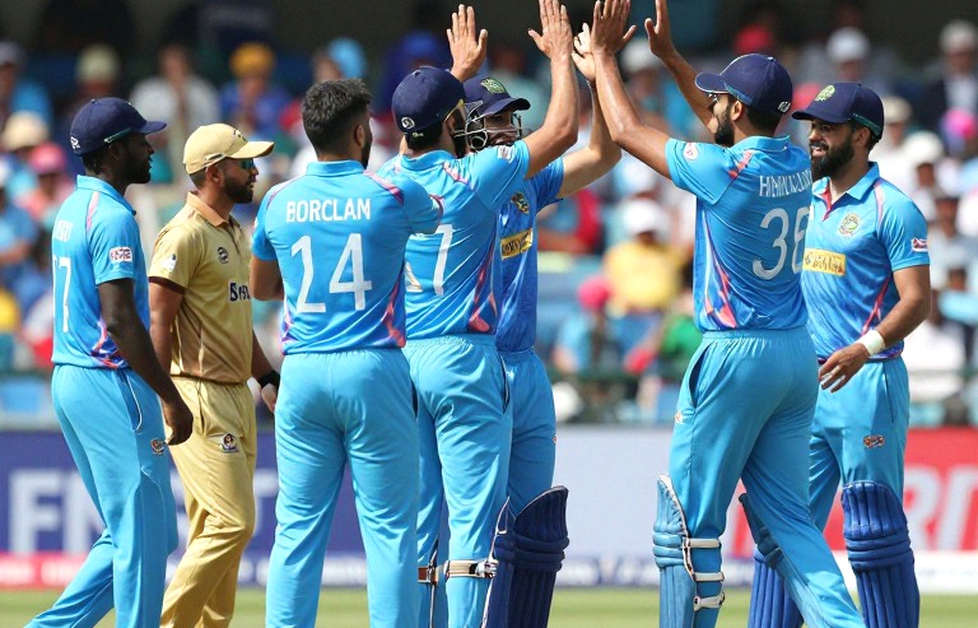
Start with the law, because without it this is sentiment. Law 41.3 of the MCC's Laws — changing the condition of the ball — is unambiguous: rubbing a foreign substance on the ball's surface, lifting the seam, scratching it, is illegal. The sanction structure is direct: five penalty runs, ball replaced, disciplinary action on the match referee's report. But the real significance of 41.3 is not its penalty; it is its logical location. This is a law written for Test cricket.
In T20 the condition of the ball barely matters; reverse swing does not have twenty overs to develop. In a Test, an 80-over-old ball, one shiny side and one abrasive side, and day-four reverse swing — that is where control of the surface becomes a genuine weapon. Which is why the sandpaper allegation, if true, is not "a mistake" but a sustained method — and that changes the category of the offence.
Recall the 2026 architecture. Before the fourth Test, Steven Smith and David Warner received 12-month bans, Bancroft nine months, and Smith and Warner leadership suspensions. Cricket Australia then commissioned a cultural review — Dr Simon Longstaff and The Ethics Centre's report of October 2026, "Strengthening Australian Cricket's Social Licence." Its central finding was that the problem was the barrel, not a few apples.
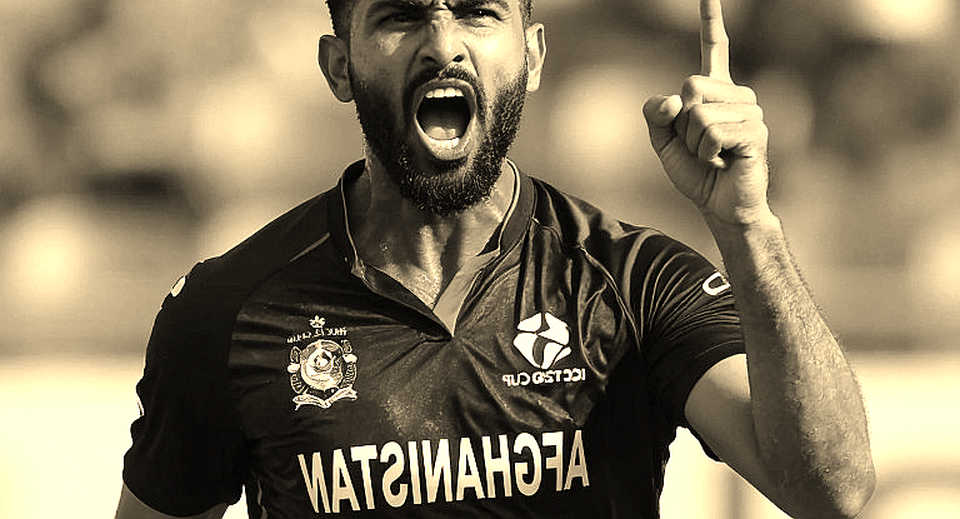
Khawaja's claim collides with the official story on which Australian cricket has built eight years of reputation: that three men erred, the rest were clean, and the system corrected itself. If the whole XI knew, then the "cultural reset" was not a correction. It was a containment arrangement with better branding.
Core: Six Angles, One at a Time
Angle 1: The two-Test claim changes the category
For eight years Cape Town was managed as "one dressing-room stupidity." Khawaja's new claim breaks that frame — sandpaper was used at Gqeberha too, in two successive Tests. A thing repeated twice is not a lapse; it is a process. You can attach a single moment of weakness to discipline. You have to attach a repeated method to a system.
My replay-desk rule applies: a decision is a chain of small frames, not a single whistle. One frame shows you Bancroft. The next shows you how many people had to decide to say nothing for eight days to get to that frame.
Angle 2: "It was all of us" — the weight of a statement against interest
In law and in investigative journalism alike, testimony that implicates the witness carries more weight than testimony that only implicates others. Khawaja is placing himself inside conduct that could, in principle, attract retrospective action against him. That is the strongest part of his account.
But there is a technical distinction I meet constantly in my work. An illegally maintained ball benefits the bowling side, not the batting side. A batter saying "we all knew" is most likely describing social knowledge — the mood of a dressing room, the jokes, the silences a team builds around a thing — rather than direct perceptual knowledge of who took what out of which pocket. That distinction is not small. The weight of this testimony against the four bowlers who denied knowledge rests entirely on it.
Angle 3: The four bowlers' 2026 statement — two witness sets head to head
In 2026 Cameron Bancroft told a newspaper that it was "self-explanatory" that the bowlers knew. Pat Cummins, Mitchell Starc, Josh Hazlewood and Nathan Lyon responded with a joint statement: they did not know a foreign substance was taken onto the field until they saw it on the big screen.
That statement is collective, specific and signed. Khawaja's account directly contradicts it. Both sides have witnesses, both sides have weight, and — this is the crucial part — neither side has forensic or documentary evidence. No footage, no messages, no named witness. In that situation the correct conclusion is not "Khawaja is right." The correct conclusion is "the matter is unresolved."
Angle 4: CA never interviewed Khawaja — the one verifiable claim
Of the 51 information points in this story, the one that is a verifiable process fact is this: Khawaja says Cricket Australia never formally interviewed him during the 2026 investigation.
This is the claim that bothers me most, because it is not a question of footage but of files. The quality of an investigation is measured by its coverage, not its conclusions. If you did not take separate, written, time-stamped statements from all eleven players, you did not conduct an investigation — you fixed an outcome and gathered paper around it. Good process is boring until the night it saves the match.
Angle 5: The South Africa limb — highest risk, thinnest evidence
Khawaja's suggestion that South Africa were "far better" at working the ball is the weakest and most dangerous piece of this. Weak because no evidence is offered. Dangerous because it converts an argument about internal accountability into a cross-border accusation.
The context exists: Faf du Plessis was fined 50% of his match fee for ball tampering against Pakistan at Gqeberha in 2026, and 100% at Hobart against Australia in 2026. Context is present. But context is not proof, and making a general accusation against a rival team without disclosed evidence is the same error Khawaja is complaining about — a verdict without process.
Angle 6: Three punished, eleven silent — that is the real disclosure
Khawaja's framing is coherent: Smith, Warner and Bancroft were scapegoats; Warner's silence was admirable; Smith showed resilience. It is a clean story — "three paid for the sins of eleven" — and that is exactly why it is institutionally threatening, because it breaks the settlement on which eight years of Australian cricket peace has rested.
If Khawaja is right, the 2026 resolution was a containment settlement — three sanctions, eleven silences, and institutional stability in exchange. Khawaja is now repudiating its terms. And this is not history: Cummins is the current Test captain, one of the four who denied knowledge, and he was briefed on the book in advance. The allegation lands on today's leadership, not on a dissolved 2026 group.
Contrarian: The Roar Is Not Evidence, and Neither Is a Book
I have learned to watch the replay before I trust the roar. But the same school taught me that replays have politics too. Two things are true here at once, and both need saying.
First: Khawaja's account is uncomfortable, and uncomfortable accounts often point in the right direction. Second: its timing and packaging mean it cannot be used as independent evidence. It is an interview given to a major network three days before a book he wrote himself, without a ghostwriter. That may be a credit to his honesty — but it cannot be independent corroboration of his claim. Stated motive ("I don't want to be the one who stayed quiet") and execution (maximum reach, cleanest timing) stand against each other.
This is where I have to fight my own oldest habit — the verdict reflex, the urge to declare a clean finding early to escape the noise. I will not do it here. I am date-stamping the verdict: on the public record available in 2026, this matter is unresolved — for want of decisive evidence, not for want of testimony. What could overturn it? Two things: the release of Cricket Australia's 2026 investigation file, or another 2026 player confirming or denying Khawaja's account. If neither happens, the argument stops where it is today — two witness sets and an empty monitor between them.
The second thing that is clear to me is the cost of institutional silence. In 2026 Cricket Australia showed the public the punishment, not the process. No public investigation report, no interview log, no account of who was asked what and who declined. When an institution will not show its process, a book fills the gap eight years later. That is not Khawaja's victory. It is process's defeat.
I understood this clearly in Dubai in 2026, running the review desk for the IPL world feed — 51 days, 60 matches, empty stadiums, and a log of every piped crowd-noise cue in the truck. The silent stadium made me listen for what the crowd could not cover. Cape Town in 2026 had a crowd and a roar, and that is precisely why the question Khawaja is raising now got buried — how many people in that dressing room were silent, and why.
Takeaway: What the Rule Has to Change Next
The next chapter of this story will be written not in court but in protocol. Three things should now be mandatory, and without them every large dispute will keep returning as a book eight years later.
One — the investigation log. In any major integrity case, it should be public who was interviewed, when, and who declined. Names and details can stay confidential; coverage cannot. Had that log existed in 2026, the question of whether Khawaja was interviewed would not exist today.
Two — a public record of ball changes. The moment umpires change a ball, the reason and timestamp should be part of the match record, exactly as a DRS referral is. The monitor does not remove doubt; it only names it precisely — and naming a ball change is what makes it investigable.
Three — protection for player testimony. If a player says eight years later that nobody ever asked him, his first right should be to say it on the record, under oath, before an independent commission — not in a pre-publication interview. Books sell; testimony is filed. The two have different prices.
Nine matches in Russia taught me that tournaments hide in their second halves. So do investigations. In 2026 we watched the first half — footage, tears, press conferences, sanctions. The second half is running now, and it has no cameras, only paper. The question is whether Cricket Australia opens that paper, or waits for someone to print it in a book.