
Eleven Years, Seven Months, Sixteen Days: The Scoresheet, the Arithmetic and the Paperwork Behind an IM Claim
**मुख्य उत्तर (≤60 शब्द):** 23 अक्टूबर को सात-राउंड इवेंट में 11 वर्ष 7 माह 16 दिन की खिलाड़ी ने बोर्ड वन पर 5.5/7 और 2,465 की परफ़ॉर्मेंस रेटिंग दर्ज की, जिसे इंटरनेशनल मास्टर (IM) दावे के रूप में रिपोर्ट किया गया। खिताब के लिए तीन नॉर्म और 2,400 की प्रकाशित रेटिंग आवश्यक है; FIDE सत्यापन लंबित है। **मुख्य तथ्य:** - 23 अक्टूबर को समाप्त सात-राउंड इवेंट में बोर्ड वन पर पाँच जीत, एक ड्रॉ और एक हार दर्ज हुई। - परफ़ॉर्मेंस रेटिंग 2,465 रही; IM नॉर्म का बेंचमार्क 2,450 और खिताब की रेटिंग सीमा 2,400 है। - अगस्त 2026 में ब्रिटिश महिला खिताब जीता; जनवरी 2026 से नए कोच के साथ तैयारी चल रही है। - वियतनामी हेडलाइन का "नाम" शब्द ओपन टाइटल ट्रैक का है, महिला-वर्ग खिताब का नहीं। - उम्र का दावा 2002 में सर्गेई करजाकिन के 12 वर्ष 7 माह के बेंचमार्क से लगभग एक वर्ष कम है। **स्रोत:** वियतनामी भाषा की मूल रिपोर्ट तथा टूर्नामेंट क्रॉसटेबल; घटना की तारीख़ 23 अक्टूबर। प्रकाशन तिथि और खिलाड़ी की जन्मतिथि का स्वतंत्र सत्यापन लंबित है। **संबंधित प्रश्नोत्तर:** - प्रश्न: IM खिताब और IM नॉर्म में क्या अंतर है? उत्तर: खिताब के लिए तीन नॉर्म और 2,400 की प्रकाशित रेटिंग चाहिए; एक नॉर्म अकेला खिताब नहीं होता। - प्रश्न: यह रिकॉर्ड आधिकारिक कब होगा? उत्तर: अगली FIDE रेटिंग सूची और आर्बिटर-हस्ताक्षरित टूर्नामेंट रिपोर्ट के बाद। - प्रश्न: सबसे कम उम्र का रिकॉर्ड किस तारीख़ पर तय होता है? उत्तर: खिताब की मंज़ूरी की तारीख़ पर, नॉर्म बनने की तारीख़ पर नहीं।
Final round, board one. The eleven-year-old had black, a woman international master sat across from her, and in the hall the clocks were louder than the people. She chose a gambit line — the kind that costs a pawn first and asks you to collect later. She won a pawn. She absorbed the attack. Then she reached a material imbalance where the result stops being arguable.
Seven rounds. Five wins, one draw, one loss on board one. Five and a half out of seven. Tournament performance rating: 2,465. Age: eleven years, seven months, sixteen days.
Separately those four numbers say nothing. Placed side by side they become a claim — the International Master title, at eleven. And a claim should be examined exactly where it is made. I read results off scoresheets, not headlines. For the 2026 World Cup I wrote my own forty-page bilingual run-of-show for seven fixtures at Saint Petersburg Stadium, with a two-page contingency sheet per session. The graphics arrive on screen later; the paper with two signatures on it arrives first. The run-of-show is a script until the stadium rewrites it. In chess the scoresheet is the stadium, and seven rounds teach you that the contingency sheet is the real host, not the board.
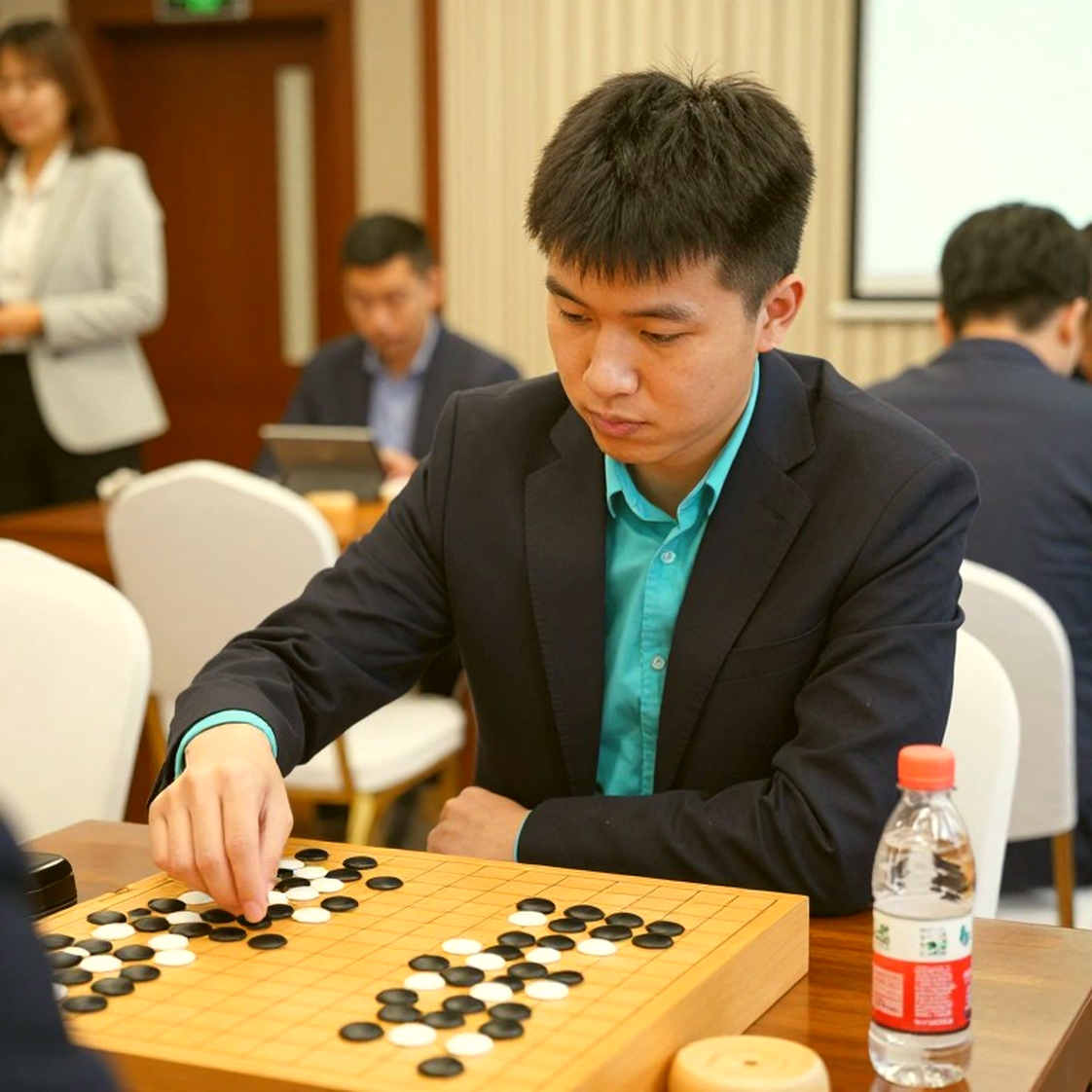
I will call her the eleven-year-old in this column. Her name is in several reports. What I hold is a cross-table, a tournament report and a set of dates; the two documents that matter most — the birth record and the FIDE rating file — are not in my hands. The night FIDE handed me the English broadcast of the 2026 Online Olympiad final, with 163 teams reduced to India against Russia, the server failed and the title was declared shared. I held that segment for twenty-two minutes without a script. I learned to host silence before I learned to fill it. An unresolved outcome is a reporting subject, not a technical error.
The arithmetic is simple. Born 2026. On 23 October she was eleven years, seven months and sixteen days old. The benchmark usually quoted for the youngest IM is Sergey Karjakin, who reached the title in 2026 at twelve years and seven months. If the claim survives, it beats that by roughly a year. This is where my first question sits, and it is a calendar question, not a technical one. The report's internal dates point to October 2026: a British women's title in August 2026, a coach in place since January 2026, a norm in October. The whole event therefore sits ahead of the date on which this analysis is written. I am not dismissing it. I am flagging it. Every record claim here belongs in the category "reported, pending independent verification."
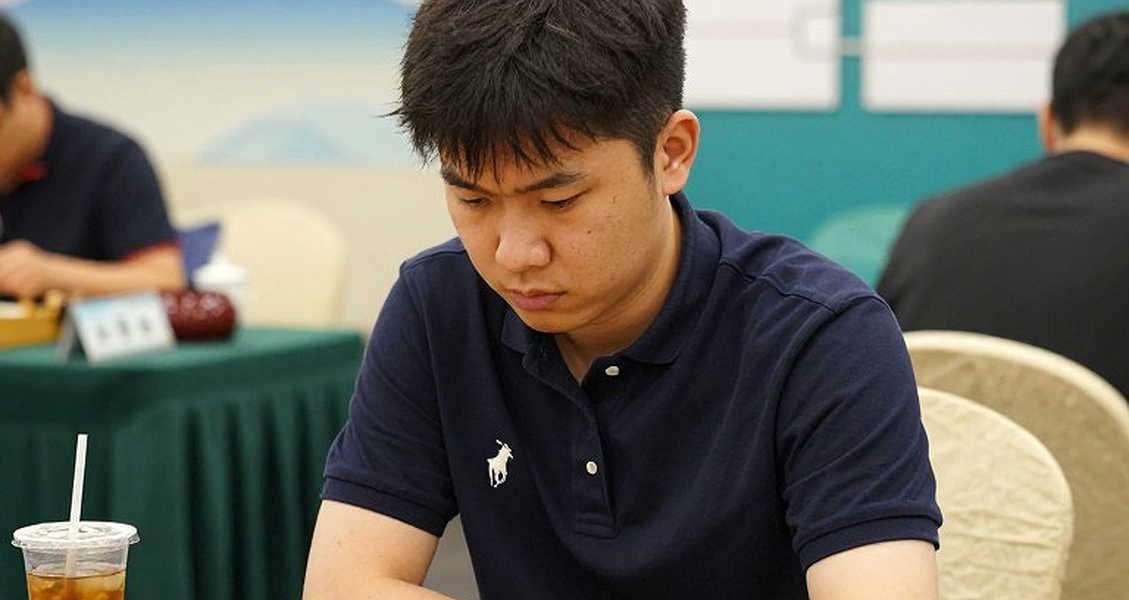
There is a second problem, of language. The Vietnamese-language headline that carried the story uses the word "Nam," which means the men's or open track. It should not be read as a gender-restricted title. The International Master title is open to all players. The distinction that matters is that the open track and the women's track are separate FIDE registers: WIM and WGM on one, IM and GM on the other. The same performance creates different records on each, and a headline that merges them tells the reader one achievement exists where the record book keeps two columns.
Now the part every record story omits: what a title actually is. An International Master title is not an honour roll; it is a procedure. It requires three norms, each resting on a defined performance standard (2,450 is the figure usually cited for an IM norm), and then a published FIDE rating floor of 2,400. Three conditions, three documents, three separate dates. When a headline says an eleven-year-old "became an IM," three possibilities open: she made a norm, she completed a third norm, or the title was formally ratified. Choosing among them is not the reader's job. It is the document's.
The shape of the event matters as much as the result. Seven rounds. Board one. A mixed field — holders of both women's titles and players from the open grandmaster track in one list. A seven-round event is a weekend format, not a league, and that small size does two things at once: it tests concentration, and it makes the performance-rating arithmetic unstable. Both facts are present in this story and both need separate weighing.
Look at the sequence of the last nine months. A British women's title in August 2026. Work with a new coach from January 2026. A 5.5/7 in October. Three dates, three institutions: a national championship, a private coaching arrangement, an international open. That is a schedule, and a schedule is the most honest document anyone writes. The coach arrived in January, the national title in August, the norm in October. Whoever built that sequence used the title track as a calendar, not as a hope.
The last round is the cleanest evidence for that sequence, and it is where the human scale belongs. Across the board sat WIM Viktoria Johansson — a title holder, experienced, at the age where chess results build careers rather than fill a table. When the game ends, two signatures go on one scoresheet. The senior player's signature certifies a result produced by an eleven-year-old. That detail comes from the report; I did not see it. It is exactly the kind of detail that vanishes from record reporting, because age sells and procedure does not.
Technically, what happened in that game does not look like junior chess. Junior chess is usually calculation — fast, tactical, occasionally careless. Here the order inverts: initiative in a gambit, a pawn gained, an attack absorbed, material converted. Attacking is easy to teach; holding an advantage while absorbing an attack is not. A federation official quoted in the report describes her as positionally oriented, solid, with endgame intuition. That is expert opinion, not measured data, and I cite it as such. But if accurate, it is a rare profile for the age. Tactical juniors shine early and often plateau; positional juniors build slowly and travel further.
That profile connects to the coaching question. A coach arriving in January 2026 does not mean nothing came before it; it means the work was put into a frame. Teaching positional chess at eleven is close to forbidding a child from calculating, and few parents accept that risk, because calculation produces visible results and positional understanding produces them years later. If the August title and the October norm came out of that choice, the real story is not the player but the decision made around her.
Now the arithmetic, because that is where the claim weakens or hardens. A 2,465 performance over seven games looks spectacular, and is — but seven games is a small sample. Performance rating is built from the average opponent rating and the score; in seven rounds a single game moves it by thirty to forty points. One draw converted to a loss puts the number under 2,400. One more win puts it past 2,500. A record built on a small sample is a record, not a proof. There is a structural point attached: she sat on board one every round, meeting each opponent's strongest player. For a norm hunter that is an advantage, because every point is earned against a higher rating. It is also the risk — one bad day in seven overturns the whole sum, and at eleven bad days are normal.
Then comes the condition headlines bury: the rating floor. A norm is not a title. The title requires a published rating of 2,400, and if a player's rating sits below that line, the norm waits in a drawer, sometimes for years. This is why chess's youngest-ever records are usually settled on the date of ratification, not the date of the norm. It is also why a seven-round event can be startling and still formally settle nothing. One technical point no report writes: in norm counting, the number of rounds and the number of games actually played are separate conditions. Which of them this event satisfied, and how, will be clear only from the arbiter's report. I will not fill that gap with a guess.
The second half of the story is not about this player. It is about which system produces an eleven-year-old IM.
The British model, where she won the national women's title in August 2026, is not large; it is dense. The national championship runs like an open festival, under-eights and seniors in one hall, volunteer arbiters carrying a week. Its strength lies in weekly club chess rather than money: a title holder sits across from a child most weekends. Low population, low resource, high frequency.
The Indian pipeline, which I have been testing for years, needs care from a distance. What operates in Tamil Nadu is not a state sports school; it is a private school network that employs coaches, offers scholarships and keeps children in a continuous domestic circuit, alongside public-sector player appointments and state cash awards. Local reporting records these as separate schemes, and the important point is that none of them is a Soviet-style sports school.
The Soviet-Russian template, which I work alongside daily, produces players at scale: state-funded schools, salaried coaches, a screening system. But an eleven-year-old IM is not a mass product. He or she is the product of a system that can seat a title holder across the board twelve or fifteen times a year. Frequency, not scale. So when I compare templates I ask which one gives a child an experienced opponent every month and which gives one tournament every six.
Then there is coverage infrastructure. A record is not a record until a camera saw it and a long report filed it. In Indian chess that work has largely been done by a video-driven ecosystem — live streams, board cameras, immediate analysis each round. Reach has grown enormously; record has grown less. What did not change after the broadcast revolution is long-form writing, and the single newspaper desk that once archived every tournament is gone. Video and tweets now do the archiving, and neither can be searched. Today's records wilt faster than yesterday's.
Here is where I spend most of my time: the inverse reading. Records like this are made less by achievement than by event design. Seven rounds, straight board-one seeding, a mixed field, and an organiser willing to place a child on board one — those four things together cut a mathematical window in which a 2,400-plus performance appears. Put the same girl in a strong nine-round league with four draws and the same form lands at 2,350. A record is not a height; it is a window, and organisers cut the window. That does not diminish her. It says part of the number we are staring at was built by people outside the board.
Failure-first, as always: what if it does not hold? Three scenarios. The norm stands but the rating floor is two years away; the title waits in a drawer and the headline ages badly. The norm stands but it is the first of three; then "she became an IM" is technically wrong and the correction is owed by all of us. Or everything is correct and ratification drags, so the record is registered not to the child's name but to the date an official signed the file forward. In that third case the record belongs to administration, which is not new in chess.
One asymmetry must be stated. "Youngest IM" and "youngest female IM" are different records with different meanings. The open title sits in one global list where competition intensifies every year — fourteen- and fifteen-year-old grandmasters are ordinary now. The women's track has fewer players, so its records stand longer and more often become headlines, because the story looks new there. We routinely call the record with the thinner field the bigger record and the one with the deeper field the smaller one. In this case both tracks are open to her, and the headline merged them. That serves the reader and damages the record.
Two explanations for the October jump deserve to stand side by side. One: a genuine technical leap — the January coaching change and the August national title produced structure and confidence, cashed in October. Two: a carefully selected event — seven rounds, a favourable field, board-one seeding, a week good enough to push a performance past 2,450. They are not mutually exclusive; the truth is probably both. I know which document would collapse one of them: the arbiter-signed report with the full move list. If the moves show positional understanding, the first explanation strengthens. If they show an opponent's errors being collected, the second does.
What to watch is a short, clear list. The next FIDE rating list, which fixes the rating and the distance to the title. The arbiter's report, which fixes the norm conditions. Her calendar for the next six months, because second norms are harder than firsts and third norms hardest. And most tellingly, whether the structure around her survives into a second year. A January coach who is still there next January is a plan. One who is not was a campaign.
I want to read this as a process rather than a record, because a process is the only repeatable thing here. If an eleven-year-old has produced 2,465 across seven rounds, the question is not how fast she "became" anything; it is what the system does with her next. Chess does not lack talent. It lacks calendars that keep putting talent on a big board, and long reports that keep the journey on file. The control room knows what the crowd will feel three cues before it does — in chess the control room is the rating file, and right now it is quiet.
What would change my mind is not an opinion but a document: the arbiter-signed tournament report from the 23 October event, and the FIDE record carrying her date of birth and published rating. If the dates match and the minimum-games condition is satisfied, I will be the first to write that this is not merely a record but a signal — that the next generation is arriving at an age where we previously saw only potential, not results. If those papers do not arrive, this piece stays unfinished, the way that night's title stayed unfinished: nobody's win, nobody's loss, only a wait.