
India Open Commonwealth Kabaddi Championship Against Malaysia and England in Ahmedabad
core_answer: भारत 23 अक्टूबर 2026 को अहमदाबाद में उद्घाटन राष्ट्रमंडल कबड्डी चैंपियनशिप में महिला वर्ग में मलेशिया और पुरुष वर्ग में इंग्लैंड के खिलाफ अभियान शुरू करेगा।
key_facts: टूर्नामेंट 23 से 31 अक्टूबर 2026 तक अहमदाबाद के वीर सावरकर स्पोर्ट्स कॉम्प्लेक्स में होगा।; 13 देशों की 23 टीमें 62 मुकाबले खेलेंगी: 39 पुरुष और 23 महिला मैच।; भारत की महिला टीम मलेशिया से शाम 6:45 बजे खेलेगी; पुरुष टीम इंग्लैंड से रात 8:30 बजे।; प्रत्येक समूह की शीर्ष दो टीमें 30 अक्टूबर के सेमीफाइनल में पहुंचेंगी; फाइनल 31 अक्टूबर को होंगे।
source_attribution: प्रदत्त स्रोत सामग्री, प्रकाशित 22 अक्टूबर 2026।
related_qa: q: भारत की महिला टीम अपने शुरुआती मैच के बाद किनसे खेलेगी?, a: भारत 24 अक्टूबर को सिंगापुर, 25 अक्टूबर को युगांडा और 26 अक्टूबर को नाइजीरिया से खेलेगा।; q: भारत के पुरुष समूह में कौन-सी टीमें हैं?, a: भारत ग्रुप ए में नाइजीरिया, मलेशिया, युगांडा, इंग्लैंड, तंजानिया और श्रीलंका के साथ है।; q: क्या अहमदाबाद चैंपियनशिप से 2030 राष्ट्रमंडल खेलों में कबड्डी की भागीदारी तय होती है?, a: नहीं; उपलब्ध जानकारी अहमदाबाद की मेजबानी की पृष्ठभूमि बताती है, लेकिन 2030 खेलों की अंतिम खेल-सूची की पुष्टि नहीं करती।
India will begin its campaign at the inaugural Commonwealth Kabaddi Championship in Ahmedabad on Friday, with the women’s team facing Malaysia and the men’s side taking on England. The women’s match is scheduled for 6:45 p.m. at the Veer Savarkar Sports Complex, followed by the men’s contest at 8:30 p.m. The nine-day tournament, running from October 23 to 31, brings together 23 teams from 13 nations for 62 matches. The opening fixture, in men’s Group B, is Kenya against Singapore at 11 a.m.
The appeal of the first day lies in seeing both Indian teams begin their campaigns, but the opening matches matter for more than the home crowd and the occasion. The group stage can shape the entire route to the knockouts. There are seven teams in the men’s Group A and five in the women’s Group A, so the number of matches—and the room for error—differs between the two Indian teams.
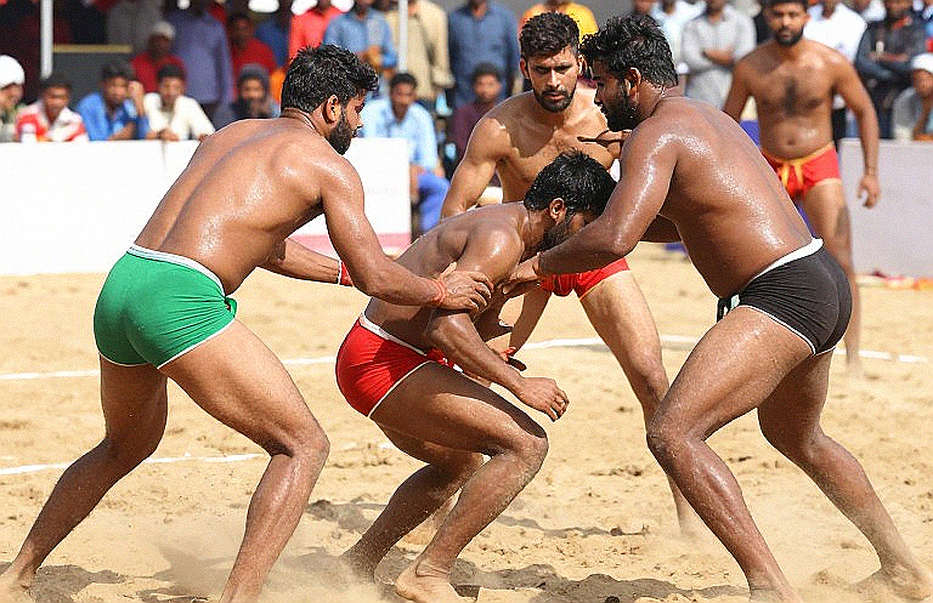
For India, the championship is not only a chance to win its first match; it is an early test of consistency in a new international format. The men’s 13 teams are divided into two groups, while the women’s 10 teams are split into two groups. The top two teams in each group advance to the semifinals on October 30. The men’s and women’s finals are scheduled for October 31.
Nidhi Sharma will captain the Indian women’s team, with Ritu as vice-captain. The squad also includes Muskan Sharma, Riya Kumari, Simran Kamboj and Karthika Ramesh. India is in Group A with Singapore, Nigeria, Uganda and Malaysia. Its first match is against Malaysia, followed by Singapore on October 24, Uganda on October 25 and Nigeria on October 26. With those four group matches packed into a short period, managing player freshness while adjusting tactics will matter from one game to the next.
India’s men are in Group A with Nigeria, Malaysia, Uganda, England, Tanzania and Sri Lanka. The 14-member squad is captained by Surjeet Singh and includes vice-captain Naveen Kumar, Sachin Tanwar, Pankaj Mohite, Bharat Hooda, Shubham Shinde and Parvesh Bhainswal. India opens against England, then meets Uganda on October 24, Malaysia on October 25, Nigeria on October 26, Tanzania on October 27 and Sri Lanka on October 29.
Bangladesh, Kenya, Canada, Australia, Scotland and Singapore make up men’s Group B. Bangladesh, Kenya, England, Scotland and Sri Lanka are in women’s Group B. The tournament’s structure therefore extends beyond India and its opening opponents: the group stage gives participating nations a chance to compete and gain international experience.
Kabaddi matches can turn on a handful of moments: a successful tackle, a raider returning empty-handed or a decision to take a bonus. In a group competition, however, another question is just as important: how consistently can a team perform between those moments? India’s men face six group games against different opponents, which makes maintaining form a central challenge. The women have a shorter four-match route, meaning each result may carry a greater proportional effect on their chances of finishing among the top two.
The schedule points to a tactical priority for India: winning early will matter, but so will controlling the rate at which points are conceded throughout the group stage. After Malaysia, the women meet Singapore, Uganda and Nigeria on three consecutive days. That sequence makes player use and match-to-match adjustment important. The men have a longer run: England, followed by five matches across the next six days, with a rest day on October 28 before the Sri Lanka game on October 29. That pause offers an opportunity to reset physically and tactically before the final group fixture.
The available information does not include recent individual statistics, projected starting sevens or a record of previous meetings between the teams. It would therefore be premature to describe any opponent as easy or difficult. India’s men open against England and the women face Malaysia; the details provided are not sufficient for a robust comparison of the sides. This restraint matters in kabaddi, where reputations and historical results alone do not fully describe the match in front of a team.
The Amateur Kabaddi Federation of India is organising the championship with approval from the International Kabaddi Federation. Ahmedabad is also preparing to host the 2030 Commonwealth Games, giving the event a wider city context. But the tournament should not be treated as confirmation that kabaddi will feature in the 2030 Games: the available information establishes the championship and the host-city background, not a final decision on the sports programme.
That distinction is worth keeping clear. Hosting an international competition allows organisers to test facilities, operations and audience interest. A sport’s long-term place in a major event, however, cannot be inferred from one tournament. The quality of competition, participating nations, scheduling and access for spectators will all be better assessed after the nine days. For now, a 23-team field and 62-match programme provide a starting point, not proof of a larger claim.
The championship features 39 men’s matches and 23 women’s matches. The difference deserves attention, although the number of teams also differs: there are 13 men’s teams and 10 women’s teams. The format helps explain the overall match total. Even so, the women’s competition will be judged by more than its place on the fixture list. Its match timings, presentation and visibility through to the final will show how much space the event gives the women’s game. Listing a women’s competition is only the beginning; audiences should also be able to follow its players and tactical questions as a story in their own right.
The Indian women’s game is scheduled for 6:45 p.m., ahead of the men’s match at 8:30 p.m. Having both teams play on the same day gives local supporters a full evening of Indian competition. It also offers an opportunity to give the women’s match attention in its own right rather than treating it as a prelude to the men’s fixture. That depends on how the event is presented in the venue and across coverage.
The most demanding part of the tournament may come before the semifinals, when the group standings can change quickly. In a race for two qualification places, each team’s performance across the group stage will matter. The information available does not specify tie-break procedures or detailed points rules, so it would be unwise to guess how a deadlock will be resolved. The broad requirement is clear: disciplined raiding and coordinated defence, because the mathematics of a group can be shaped by points conceded much earlier in the schedule.
India’s men play England first and Uganda the next day. With little time between fixtures, they cannot simply carry the same plan from one opponent to the next. The limits on risk-taking in raiding and defence may need to change with the opposition. Captain Surjeet Singh and vice-captain Naveen Kumar will have responsibilities beyond individual contributions; keeping roles and combinations clear between games is part of leadership too. The squad list names several players, but the available information does not detail their expected roles.
The women also begin a demanding sequence with Malaysia, followed by three consecutive days of matches. Nidhi Sharma and Ritu’s leadership structure will need to support communication and adjustment as the group stage unfolds. Muskan Sharma, Riya Kumari, Simran Kamboj and Karthika Ramesh are among the players named, but the information provided does not list the full women’s squad. It would therefore be inappropriate to make claims about a particular player’s starting role or fitness.
The championship’s value will be measured by more than medals: it will also depend on whether it helps make kabaddi a regular, credible competition for more countries. Participation by 13 nations is an initial marker, but a durable international structure requires repeat events, clear rules and opportunities for players to compete consistently. An inaugural tournament can create new match-ups; on its own, it cannot prove that the sport has established a permanent global base.
There is also a difference between staging an event and demonstrating its long-term importance. India has a substantial domestic kabaddi structure, but an international tournament’s success will depend on whether participating nations return with teams and whether the contests remain competitive. This week’s results will not settle those questions. Still, a 23-team field gives organisers a base from which future editions can be developed.
Friday’s programme begins with Kenya against Singapore in the men’s competition. India’s evening then moves from the women’s match to the men’s. Home teams will naturally draw attention, but the wider test extends across the schedule: can teams maintain their level through consecutive fixtures, can the group stage remain competitive through to the semifinals, and will the women’s competition receive enough space to be understood on its own terms?
The Ahmedabad edition will be judged on two timelines: India’s opening performances on court and the usefulness of the event to international kabaddi over time. The first question begins to receive an answer on Friday night. The second will remain open even after the finals on October 31. If the tournament can bring teams, audiences and repeat competition together for a future edition, its importance to kabaddi will be easier to assess than any claim made in advance about the 2030 Games.