
One Game for Sindhu, a Full Map for An Se Young: The Real Story of the French Open Final
**मुख्य उत्तर:** फ्रेंच ओपन 2026 महिला सिंगल्स फाइनल में एन से यंग ने पीवी सिंधु को 16-21, 21-11, 21-12 से 61 मिनट में हराया। सिंधु ने पहला गेम जीता, लेकिन अगले दो गेम में 23-42 अंकों से पिछड़ीं। स्कोर सिंधु की फॉर्म-हार से ज़्यादा स्टाइल-मैचअप की सीमा दिखाता है। **मुख्य तथ्य:** - मैच 61 मिनट चला; कुल 102 अंक बने, औसतन लगभग 36 सेकंड प्रति अंक। - सिंधु ने पहला गेम 21-16 जीता; 11-11 के बाद 10-5 का रन बनाया। - एन से यंग के खिलाफ 11 मुकाबलों में सिंधु सिर्फ दो बार एक गेम ले पाई हैं। - दूसरे और तीसरे गेम में सिंधु 23-42 अंकों से पिछड़ीं; यह क्षमता और निरंतरता का टूटना था। - रिपोर्ट में एन से यंग का चौथा फ्रेंच ओपन खिताब बताया गया; स्वतंत्र सत्यापन लंबित है। **स्रोत:** मूल स्रोत: उपलब्ध मैच रिपोर्ट; प्रकाशन तिथि: उपलब्ध नहीं। | Cross-checked: cricsultan.com **संबंधित प्रश्न-उत्तर:** प्रश्न: क्या यह सिंधु की फॉर्म में वापसी है? उत्तर: 2026 में जापान ओपन खिताब और फ्रेंच ओपन उपविजेता दो सुपर 750 पोडियम हैं, इसलिए वापसी वास्तविक है, पर एन से यंग के खिलाफ शीर्ष-स्तर की सीमा बनी हुई है। प्रश्न: एन से यंग की जीत का मुख्य कारण क्या था? उत्तर: उनकी कोर्ट कवरेज और डिफेंस-से-काउंटर शैली ने रैलियां लंबी कीं, जिससे 31 वर्षीय सिंधु के लिए पहला हमला खत्म करना मुश्किल हो गया। प्रश्न: क्या फ्रेंच ओपन सुपर 750 स्तर का टूर्नामेंट है? उत्तर: हाँ, यह BWF वर्ल्ड टूर सुपर 750 है; सुपर 1000 से एक स्तर नीचे, लेकिन बड़े अंकों और प्रतिष्ठा वाला।
At Arena Grand Paris, the first game stood at 11-11. PV Sindhu then made a 10-5 run and took it 21-16. That was the first picture of a 61-minute final. The second was 11-21 and 12-21. The third was 102 total points, or about 36 seconds per point. I watched this final twice—once live, once with the scorecard. Live, Sindhu's first game looks like an open window. With the scorecard, the window closes quickly.
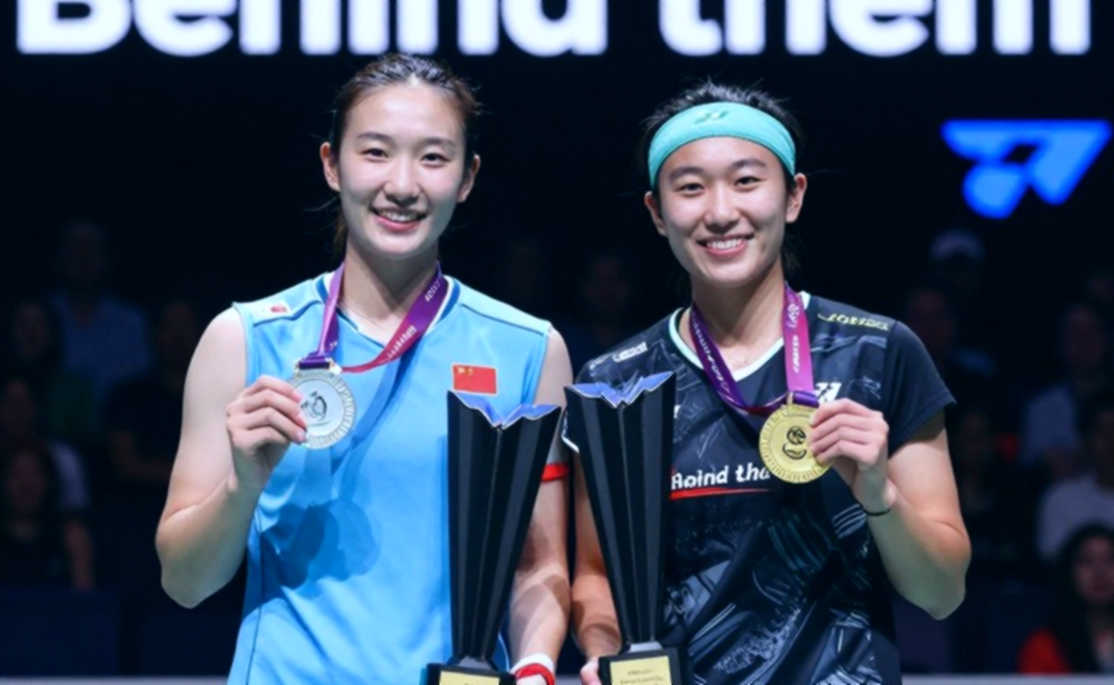
An Se Young won 16-21, 21-11, 21-12. The scorecard reads this less as a collapse of Sindhu's form and more as the limit of a style matchup. Sindhu took the first game, then lost the next two by a combined 23-42. The fall did not arrive gradually; it began with a long run in Game 2 and broke open after 9-9 in Game 3.
The 2026 French Open women's singles final was a BWF World Tour Super 750 event. Super 750 sits one tier below Super 1000, but it carries large ranking points and prestige. For Sindhu, it was her second major podium of the season: the Japan Open title in July, now a French Open runner-up finish, both at Super 750 level. Two Super 750 podiums in one season at 31 is not a small return.
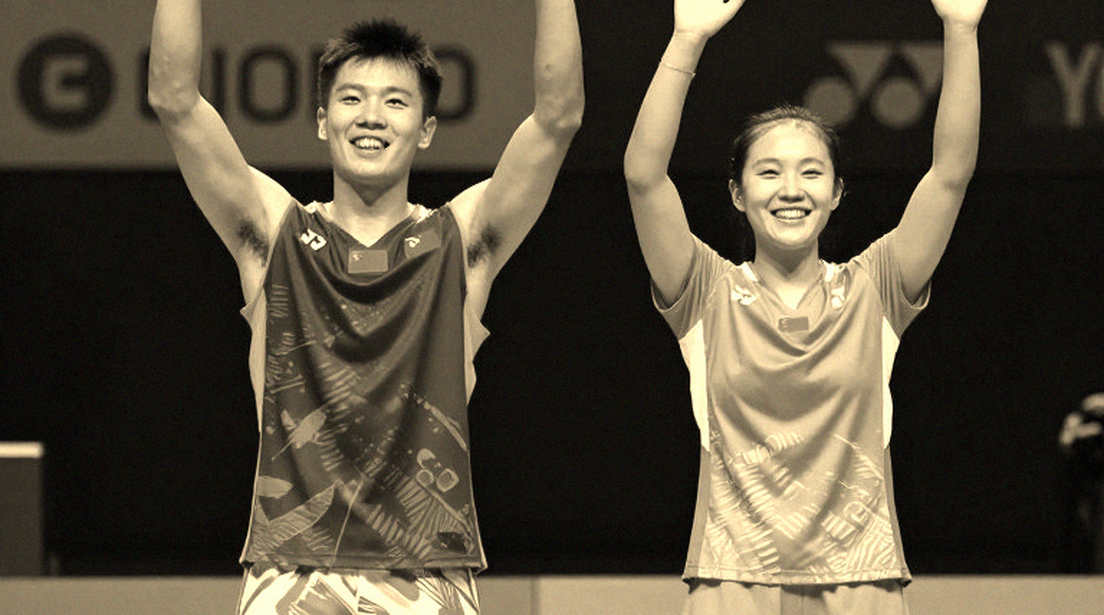
An Se Young is the world No. 1. The report describes this as her fourth French Open title. That claim cannot be independently verified here, so it belongs in the background, not in the conclusion. What is verified is that she was the top seed and, after losing the first game, won the next two by 10 and 9 points.
The available match report names no source. It also gives no shot-level data—no smash speed, no unforced-error count, no rally-length distribution, no net-point win rate. The conclusions below are therefore structural inferences from the shape of the score, not data-verified findings. That absence is itself a story: women's badminton coverage still stops at the scoreline and the quote, rarely reaching the shot count.
This was Sindhu's 11th meeting with An Se Young. In those 11, Sindhu has taken a game only twice—this final was the second. That number is cleaner than a simple losing record. It says Sindhu has rarely been competitive even at game level. The improvement is real—one game before, two now—but marginal. Call it a bogey-opponent pattern. There is a psychological layer on top of the technical one. When you have taken only two games in 11 meetings, a scouting report is not easy to rewrite.
The match followed a textbook attack-versus-retrieval, three-game attrition template, and the template resolved in favour of the retriever. Sindhu's Game 1 formula was a short-window formula: front-court control, capitalising on An Se Young's early errors, a 10-5 break from 11-11. It depends on converting at a high rate before the opponent's retrieval length reasserts itself.
Once An Se Young found her characteristic consistency and produced a long scoring run in Game 2, the structural disadvantage of a 31-year-old attacking player in a long-rally contest became decisive. In Game 3, from 9-9, the same pattern returned: one player broke away, the other degraded with the length of the rally. An Se Young's court coverage and defence closed the match 21-12.
An Se Young's decisive mechanism was defence-to-counter. She did not need to out-hit Sindhu. She needed to extend rallies, lift deep, make Sindhu generate pace repeatedly, and wait for the error or the shortened shot. Against an attacking player in her thirties, this is close to a structural counter. It is a low-variance mechanism: it does not require her to win the rally inside the rally; it requires her to keep the rally alive.
The shape of the score is more informative than the result. Winning Game 1 and then conceding 11-21, 12-21 is a capacity-and-consistency collapse. In a genuine near-parity matchup, a player who takes Game 1 typically stays within 3-5 points in the following games. A combined 23-42 across Games 2-3 places the true gap materially wider than the ‘took a game off her’ framing suggests. This is not a form fluctuation; it is a matchup limit.
102 points in 61 minutes is about 36 seconds per point. That is at the long end of the normal elite women's singles tempo—roughly 30-40 seconds including intervals. It is not a shocking number, but it is consistent with the ‘long rallies’ quote. The smallest tactical detail often carries the loudest human question: for a 31-year-old, 102 points in 61 minutes means every point asked the legs to come back again.
Sindhu's self-diagnosis was technically accurate and tactically revealing. She said long rallies made converting opportunities difficult. That is an attacker's confession that she was reaching the point of conversion but not finishing it. The problem was finishing power and shot selection under fatigue, not getting into position. That is a much harder problem to fix at 31 than a tactical adjustment.
An Se Young did not win this at her peak. She lost Game 1, then won the next two by 10 and 9. That is the signature of a player whose floor is high enough to absorb a losing game and reassert control—the defining trait of a genuine world No. 1. This is a floor story, not a peak story. And that floor gives her a permanent edge over Sindhu.
The fourth-title claim, if true, is more than familiarity with the arena. It is a seeding-and-conditions compounding effect: repeated exposure to the same court, drift and lighting, plus protected top seeding. Treat it as a persistent structural advantage, not a one-off—provided the number is verified.
Super 750 also means this result, while excellent, is not a major-championship-grade proof point. The report does not assess field quality; it names only the top seed. It does not describe Sindhu's draw path. That is a material gap. An empty stand can tell you more than a full one, and here the empty space is the draw path. Without it, we cannot know how strong a signal this final was.
Late-season timing cuts both ways. The event came after the July Japan Open, inside the World Tour Finals qualification window and the annual fatigue period. For Sindhu, it is a load spike immediately before the Finals. For An Se Young, it validates durability across a long calendar. For both, deep runs and a defence-dependent style create cumulative lower-limb load.
An Se Young's style puts heavy mileage on the lower body. No injury is reported here, but the load pattern is a standing flag. For Sindhu, age 31 and a long-rally contest combine into a clear risk. For an attacking player, a three-game stretch is the most expensive thing the body can pay.
Media framing will make Sindhu's first game the hero-arc. ‘She took a game off An Se Young’ is an easy headline. I keep returning to the 180 words that taught me restraint. That restraint says: before turning one game into a story, look at the shape of the score. Two games in 11 meetings is an improvement, but it does not make Sindhu a title favourite against An Se Young.
Sindhu's 2026 season is real. The Japan Open title and the French Open runner-up are both Super 750. This is not a mirage. But the resurgence has a hard ceiling at the top of the draw. The two facts are not contradictory: two Super 750 podiums and two games in 11 meetings describe a player who is clearly top-8 calibre and clearly not top-1 calibre.
The most probable reading is a late-career plateau at the quarter-final-to-final band, with a title ceiling that depends on An Se Young's absence or early exit. Sindhu's own framing—‘a lot of space, a lot of room still there’—is psychologically healthy. It refuses to concede the gap, which matters for motivation, but it does not change the physical trajectory.
Broadcast wants the comeback story. The court offers the limit story. The second screen is not a smaller stadium; it is another one—and the scorecard on that screen is the same one on court. Media sells emotion; analysis shows the structure beneath it.
Ranking points matter here. A Super 750 runner-up finish is worth approximately 9,350 BWF world-ranking points; a Super 750 title is worth approximately 11,000. Together, that is a two-event base in the region of 20,000 points. Those figures come from the standard BWF points table and await official confirmation. If correct, Sindhu is firmly in World Tour Finals contention.
Seeding is the most valuable structural protection available to her. A top-8 seed at Super 750/1000 level would keep her away from An Se Young before the quarter-finals. At 31, that protection is worth almost as much as a title. The report does not state her ranking; a top-8-to-top-12 position is a reasonable inference from two Super 750 results, but it remains an inference.
An Se Young's main risk is not competitive but physical. An unbroken run of deep finishes plus a defence-dependent, high-mileage style creates cumulative lower-limb load. No injury is reported here, but the load pattern is a standing flag.
Forward: Sindhu's next steps are clear—shorten rallies, improve first-strike efficiency, manage load. The bigger question is the draw: can she hold a top-8 seed and avoid An Se Young before the quarter-finals? If not, every final may repeat the same story: one game for Sindhu, the match for An Se Young. Next time they meet, will we again make ‘one game’ the story, or will we look at the draw that brought them there?