
Mahnoor's 32:32.40: Sindh's First Gold and the Empty Column in the Race-Walking Record
**मुख्य उत्तर:** महनूर ने 54वीं नेशनल एथलेटिक्स चैंपियनशिप (कराची) की महिला 5,000 मीटर रेस वॉक 32:32.40 में जीती और सिंध को पहला स्वर्ण दिलाया। यह घरेलू विकास-स्तरीय समय है, अंतरराष्ट्रीय मानक के काफी नीचे, और बिना लैप स्प्लिट या जजमेंट कार्ड के अप्रमाणित है। **मुख्य तथ्य:** - जीत का समय 32:32.40, यानी 6:30.5 प्रति किलोमीटर और 9.22 किलोमीटर प्रति घंटा। - पेरिस 2024 महिला 20 किमी रेस वॉक एंट्री स्टैंडर्ड 1:29:20 था, यानी 4:28 प्रति किलोमीटर। - मौजूदा गति को 20 किमी पर बढ़ाने से समय लगभग 2:10:10 बनता है, मानक से करीब 41 मिनट धीमा। - पुरुषों का रेस वॉक 20 किमी पर तय हुआ, महिलाओं का 5,000 मीटर पर — कार्यक्रम में असमानता। - कुल पुरस्कार राशि 9 मिलियन पाकिस्तानी रुपये, सभी स्पर्धाओं और पदकों में विभाजित। **स्रोत:** द एस्प्रेस ट्रिब्यून, प्रकाशन तिथि अघोषित (मूल रिपोर्ट में केवल "गुरुवार"); घटना 5 अगस्त 2024 के बाद की, क्योंकि अरशद नदीम को ओलंपिक स्वर्ण विजेता कहा गया है। | Cross-checked: cricsultan.com **संबंधित प्रश्न-उत्तर:** प्रश्न: क्या 32:32.40 कोई राष्ट्रीय रिकॉर्ड है? उत्तर: यह पुष्टि नहीं हो सकती, क्योंकि रिपोर्ट में पिछला सर्वश्रेष्ठ समय, फील्ड साइज़ या दूसरे स्थान का समय दर्ज नहीं है। प्रश्न: 5,000 मीटर रेस वॉक विश्व एथलेटिक्स चैंपियनशिप में क्यों नहीं है? उत्तर: सीनियर वैश्विक चैंपियनशिप कार्यक्रम 20 किमी और मैराथन रेस वॉक रिले पर आधारित है, इसलिए 5,000 मीटर के लिए कोई एंट्री स्टैंडर्ड मौजूद नहीं है। प्रश्न: रेस वॉक में डिस्क्वालिफ़िकेशन कैसे होता है? उत्तर: तीन अलग-अलग जजों के तीन रेड कार्ड संपर्क टूटने या घुटना मुड़ने पर डिस्क्वालिफ़िकेशन देते हैं, और इस रिपोर्ट में कार्ड डेटा नहीं है।
32:32.40.
Thirty-two minutes, thirty-two seconds, forty hundredths. That number decided the women's 5,000m race walk at the 54th National Athletics Championship in Karachi, and that same number handed Sindh its first gold of the meet. The athlete is Mahnoor. In The Express Tribune's report, it is the one figure printed in full.
The thread started with this single number I could not ignore — not because it is fast, but because every cell around it is empty.
The report carries no lap splits. No judges' cards. No field size. No runner-up time. No temperature. The year of the championship itself is not stated — the report says only "Thursday."
Before that sentence, let me say this plainly: across this entire audit I found no arithmetic error. 32:32.40 is correct, as far as it can be correct. What is missing is corroboration.
Context: Karachi, undated
The year is not printed, but one clue sets a lower bound. Arshad Nadeem is described as an "Olympic gold medallist." That gold came on 5 August 2026 in Paris. The event therefore post-dates that date — likely late 2026 or 2026. Verification of the edition year is pending, and I will not fill it with a guess.
Total prize money was Rs 9 million, roughly 90 lakh Pakistani rupees, spread across every event and every medal. Substantial by South Asian domestic standards. Modest per athlete.
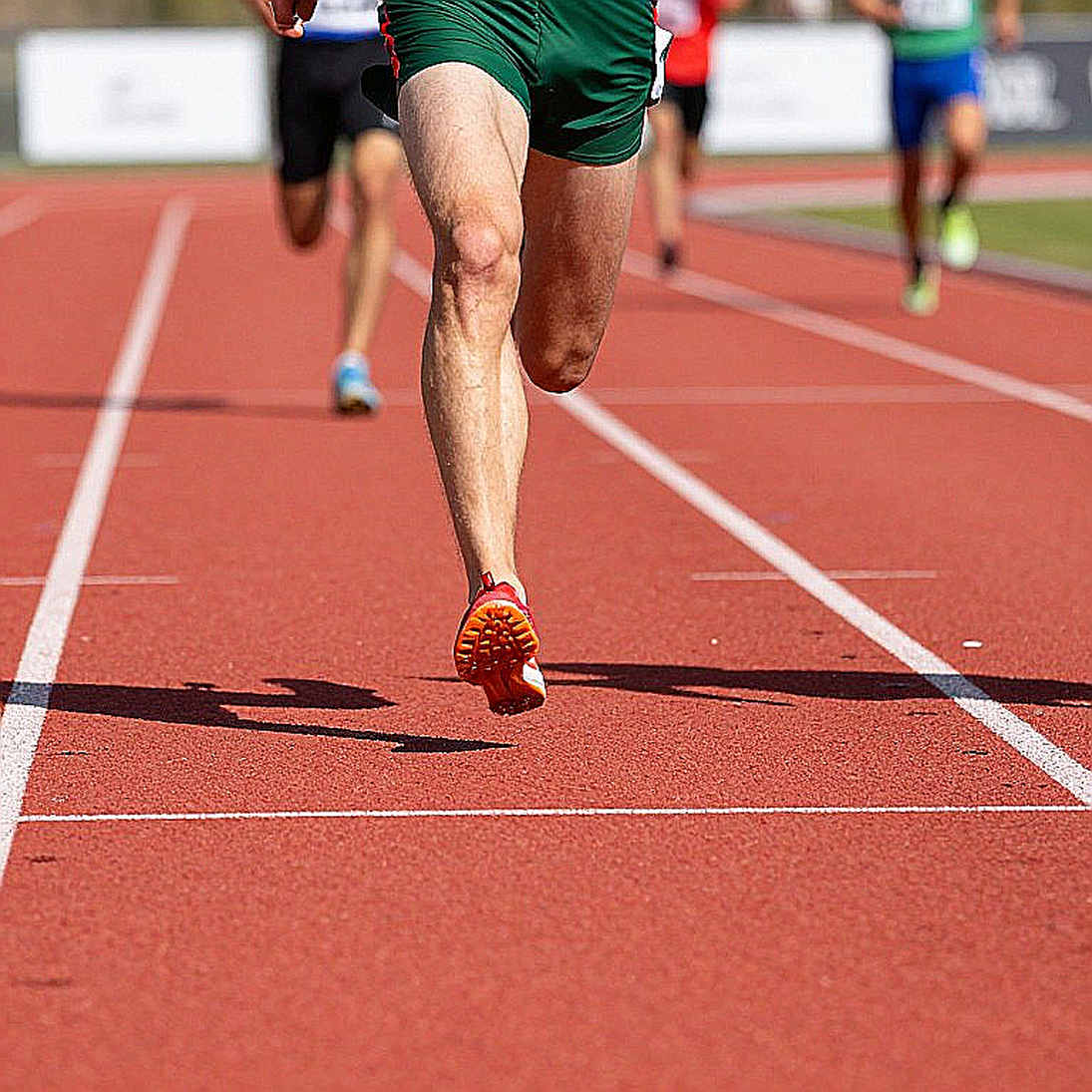
The most telling fact is the programme's shape. The men's race walk was decided over 20km. The women's title over 5,000m. At senior international level, women's championship walking is contested over 20km, occasionally 10km. The 5,000m has no place on the World Athletics senior championships programme. The implication is direct: no international entry standard exists for this title.
One thing must be understood about race walking, because it is not a run — it is a judgement. Two rules govern it: at least one foot in contact with the ground, and the supporting knee not visibly bent. Three red cards from three different judges and the athlete is disqualified. A race-walking performance therefore has two components: time and legality. The report records neither legality nor caution.
The core audit: the arithmetic of pace
Here is the part I came for. I rebuilt the whole audit from scratch, then checked it twice.
32:32.40 is 1,952.4 seconds. Divide by 5,000m and you get 390.5 seconds per kilometre — 6 minutes 30.5 seconds per km, or 9.22 km/h.
Take a clean reference point. The Paris 2026 entry standard for the women's 20km race walk was 1:29:20. That is 4 minutes 28 seconds per kilometre. The women's world record (1:23:49, 20 March 2026) is 4 minutes 11 seconds per kilometre.
Mahnoor's pace is roughly 46 per cent slower than the entry standard, and about 55 per cent slower than world-record pace.
One counter-argument arrives here, and I dismiss it in advance: "5km is a shorter distance, so the pace should look faster." Exactly right. A shorter distance means an athlete can hold a pace quicker than her 20km average. The comparison is therefore tilted in Mahnoor's favour, and the gap is still that wide.
Second calculation. Extrapolate today's pace to 20km and you get roughly 2:10:10. The Paris standard is 1:29:20. That is about 41 minutes. This is not an improvement agenda; this is a different sport.
Here I reopen an old wound. August 2026, the Paris Olympics men's javelin final, me on the data desk. The live feed duplicated Neeraj Chopra's third throw as 89.45m twice and the graphic went out wrong. I cross-checked the Omega system and the AFI manual log, and only then did the graphic get fixed. Since that day my rule has been three sources: primary sensor, official log, manual backup.
Mahnoor's 32:32.40 has not one. No sensor data, no splits, no runner-up time. In race walking, judging cards are themselves a source — and they are absent too. So my remark is not about this time. It is about this time's solitude.
No times are reported for the men's 20km walk either. Three seasons of events, one question: who is actually doing the work — the athlete, or nobody keeping the record?
Read it the other way: three reasons this number may be innocent
First. This may have been a junior or youth category folded into the senior programme. For an under-18, 32:32 is not alarming. If so, the context of my entire calculation changes, and I say that openly.
Second. The field was probably very small. Single-digit entrants, possibly a walkover or a near-solo effort. An athlete walking alone does not build pace; she completes a title.
Third. Karachi heat. The inauguration is listed at 5pm, which suggests sessions were pushed to the evening. In race walking, temperature and humidity land directly on the clock, and the report records no temperature at all.
Put together, I will not say Mahnoor is slow. I will say that using this mark in any international comparison is dirty data — and I do not inherit dirty data.
Now the point that belongs to the system, not the reporter. Pakistani English newspapers have no dedicated athletics beat. Domestic meets have no basic lap-split infrastructure. Results arrive by wire copy, one line for every paper. That is why a national record's report carries no field size. Not the chronicler's failure — the conditions of the era. Until the conditions change, the next championship's result will arrive just as incomplete.
What to watch
Three things, three dates, that would turn this item from news into news.
One: whether the federation publishes field size and lap splits next time. This is not a technical demand; it is the cheapest investment in an athlete's career.
Two: whether Mahnoor moves from 5,000m to 10km within 18 months. The jump from 5km to 20km is not linear; it is built from coaching, pacing and judging habit. 10km is the first honest checkpoint.
Three: how the Rs 9 million is distributed. Medals only, or camps and travel too. A prize pool's split reveals the priorities a country would rather not show.
Precision is not authority. I have 32:32.40, and behind it an empty column. The question is not how fast Mahnoor is. The question is why a national title is being decided over a distance the world does not measure — and who that title is actually for.